What Is a Driveway Safety Mirror?
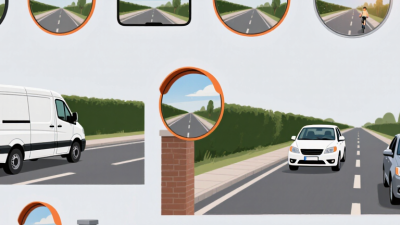
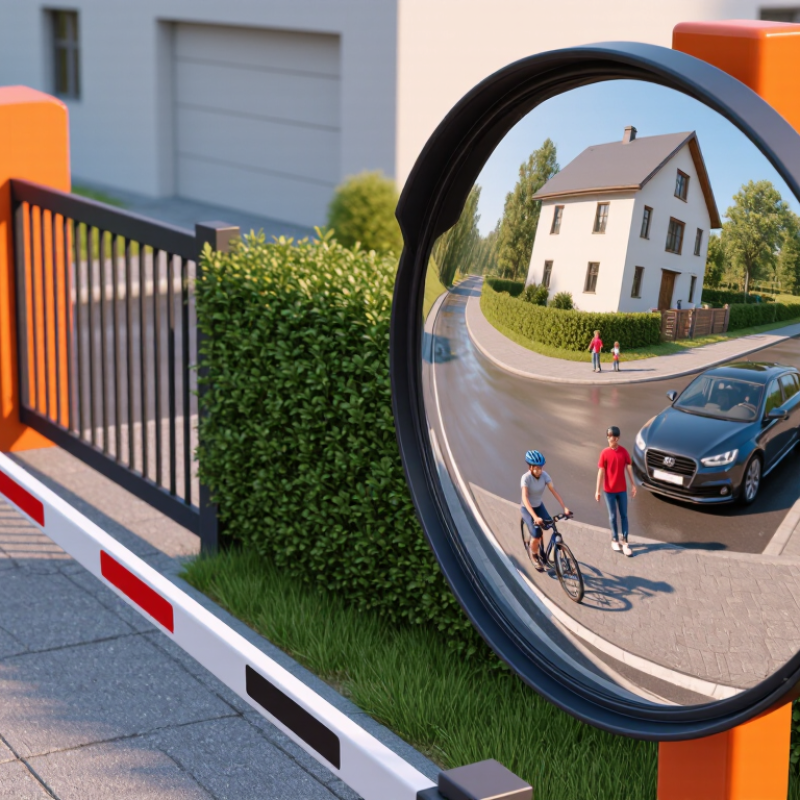
A driveway safety mirror is a curved mirror placed near a driveway exit or another restricted-view area. Its wide reflection can help drivers see approaching cars, cyclists, pedestrians, or a child near the curb. The mirror is especially useful when a hedge, fence, wall, or parked vehicle blocks the usual sightline. Driveway safety mirrors come in different sizes and materials, and the right choice depends on viewing distance, exposure to weather, and the angle of the approach. A broad view matters. So does a clear reflection.
Placement makes a real difference. A mirror set too high, too low, or at the wrong angle may show sky, pavement, or only part of the road. Before fixing one in place, check what it reflects from the driver’s seat and from the likely approach direction. Keep the surface clean, and inspect its mounting after strong wind or heavy rain. These checks are simple, but easy to forget. A mirror can improve awareness; it cannot show every hazard or judge another road user’s speed. Drivers should still stop where appropriate, look in both directions, and move slowly. It is a useful aid, not a guarantee. Its value depends on careful placement and attentive use.
Definition and Purpose of a Driveway Safety Mirror
A driveway safety mirror is a convex, weather-resistant mirror positioned to reveal areas hidden from a driver’s seat. It may show a sidewalk, gate, or bend in the drive before a vehicle enters it. The purpose is simple: make approaching pedestrians, cyclists, or traffic easier to notice when walls, hedges, or parked vehicles block a direct view. A small mirror can help. It cannot show everything.
Placement matters more than size alone. Mount the mirror where drivers can glance at it without turning away from the exit, and check that rain, glare, or branches do not obscure the view. Convex surfaces make objects appear smaller and farther away, so drivers should still pause and look directly before moving.
In research summarized by the Insurance Institute for Highway Safety, rearview cameras were associated with a 17% reduction in police-reported backing crashes; cameras are not driveway mirrors, so this figure does not measure mirror effectiveness. It does show why added visibility can matter.
A mirror is not a guarantee, and judging distance in one takes practice.
How a Driveway Safety Mirror Improves Visibility
A driveway safety mirror is usually a convex outdoor mirror placed where a wall, hedge, or parked vehicle blocks the view. Its curved surface shows a wider area than a flat mirror, helping drivers check for approaching cars, cyclists, and pedestrians before edging toward the road. The image appears smaller, though. A person or vehicle may be closer than it looks.
Position matters. Set the mirror where a driver can see it from the stopped position, then adjust its angle to include both the driveway edge and the relevant stretch of road. NHTSA’s Traffic Safety Facts: 2022 Data reports 7,522 pedestrian deaths in U.S. traffic crashes that year. That figure is not specific to driveways, and a mirror cannot prevent every collision, but it underscores why clear sightlines matter around moving traffic.
Check the view from the driver’s seat, not just from the curb. Rain, dust, glare, and overhanging branches can obscure the reflection; clean and inspect the mirror regularly. It may also be worth checking the view again after moving a bin or trimming a hedge. Mirrors distort distance, so drivers should still stop, look directly when possible, and move slowly. A mirror helps. It does not replace caution.
Common Mirror Types and Key Components
Driveway safety mirrors are usually convex, flat, or dome-shaped. Convex mirrors show a wider area, helping drivers check blind corners, gates, and narrow exits. Their curved surface makes vehicles appear smaller and farther away, though. A flat mirror gives a more natural sense of distance but covers less space. Dome mirrors can show several approaches at once, but their images may be harder to interpret quickly.
Key components include the reflective face, protective housing, mounting bracket, and adjustable joint. Outdoor faces are commonly made from acrylic, polycarbonate, or glass. A weather-resistant housing can help protect the surface from rain and dust, while a sturdy bracket limits movement in wind. Check the view from the driver’s seated position; a mirror mounted too high may reflect sky instead of approaching traffic. Small details matter. The National Highway Traffic Safety Administration reported 7,522 pedestrian deaths in 2022 in its Traffic Safety Facts: Pedestrians report. That figure does not measure driveway-mirror effectiveness, but it underscores why visibility deserves care. Mirrors can still distort distance, and glare or dirt can hide a small object. I would treat one as an extra view, not a substitute for stopping and looking directly.
What Is a Driveway Safety Mirror?
A driveway safety mirror helps drivers see approaching traffic or hidden areas where direct visibility is limited. Convex mirrors provide a wider view than flat mirrors, while flat mirrors show objects with less distortion. Outdoor models commonly use a reflective face, a mount, and suitable weather-resistant hardware.
Example component counts for a basic assembly: one reflective face, one adjustable bracket, one support, and two or more fasteners. A protective rim or housing may be included; designs vary by mirror and installation.
Choosing a Suitable Location and Installation Method
What Is a Driveway Safety Mirror?
Choosing a Suitable Location and Installation Method
A driveway safety mirror reveals traffic hidden by walls, hedges, or parked vehicles. Placement matters more than mirror size. The WHO’s 2023 Global Status Report on Road Safety estimated 1.19 million road deaths worldwide in 2021. That global figure is not driveway-specific, but it puts everyday visibility risks in context. Walk the vehicle’s approach and nearby sidewalk before choosing a position. Aim the mirror to show approaching cars, cyclists, and pedestrians without forcing the driver to lean forward. Keep the view clear of branches and headlight glare.
A convex mirror gives a wide view, but makes vehicles look smaller and farther away. Treat it as an aid, not a substitute for stopping and checking directly. Test the view from the driver’s seat, at dusk, and after rain. A rigid wall or post usually holds alignment better than a flexible fence. Follow the mirror maker’s mounting guidance, and check that the support can withstand local wind and weather. The ideal angle may take a few adjustments; that part is easy to underestimate.
Tips: Temporarily mark the proposed spot, then check sight lines from both the car and the sidewalk. Recheck after trimming plants or moving stored items.
Limitations and Safe Use Considerations
What Is a Driveway Safety Mirror?
Limitations and Safe Use Considerations
A driveway safety mirror can help reveal traffic or pedestrians hidden by a wall, hedge, or parked vehicle. It does not show every hazard. A curved surface makes objects appear smaller and farther away than they are, so judging speed and distance can be difficult. A small car in the mirror may be closer than it looks. Take that seriously.
Placement matters. Mount the mirror securely where it gives a clear view of the driveway exit, and check the sightline from the driver’s position. A view that works for one vehicle may not work for a taller car. Rain, dust, frost, and low light can also blur the image. Check and clean the surface regularly. Even then, glare or shadows may hide movement.
Use the mirror as one aid, not as permission to pull out. Stop before the sidewalk or road, look directly in both directions, and move slowly when visibility allows. Pause if anything is unclear. That extra moment can feel awkward, but rushing is worse. A mirror cannot replace a clear view, careful driving, or appropriate changes to a blocked sightline.
What Is a Driveway Safety Mirror? - Limitations and Safe Use Considerations
| Topic |
What to Know |
Safe-Use Consideration |
| Purpose |
A driveway safety mirror is a reflective aid that can help a driver see some traffic or other hazards that are difficult to view from a driveway entrance. |
Use it to supplement direct observation, not as proof that the road or path is clear. |
| Convex image |
Many outdoor safety mirrors are convex, allowing a wider view while making reflected objects appear smaller than they are. |
Do not rely on the image to judge a vehicle’s exact distance, size, or speed. Check directly and allow ample time before moving. |
| Field of view |
The mirror shows only the area reflected from its position and angle. Vehicles, vegetation, fences, or other objects may block parts of the view. |
Choose a position that provides a useful view without obstructing pedestrians, road users, or visibility from other driveways. Recheck the view from the driver’s seat. |
| Blind spots |
A mirror cannot reveal objects outside its reflected area, and a single mirror may not show traffic approaching from every direction. |
Look both ways and check for pedestrians, cyclists, and other hazards directly before entering or crossing a road. |
| Night and glare |
Low light, darkness, bright headlights, and glare can make a reflected image difficult to interpret. A mirror does not provide its own illumination. |
Do not assume the mirror will make nighttime visibility adequate. Keep the exit maneuver slow and use appropriate vehicle lighting. |
| Weather and upkeep |
Rain, frost, condensation, dust, and surface damage can reduce image clarity. Wind or a loose mount can change the mirror’s angle. |
Inspect the mirror and its mounting regularly, clean it as needed, and adjust it if the reflected view changes. |
| Placement and permission |
A mirror’s usefulness depends on its location, height, and angle. Mounting it near a road may involve property boundaries or local requirements. |
Install it securely on property where you have permission, and check applicable local rules before placing anything near a public road. |
| Right of way |
A driveway mirror is a viewing aid, not a traffic-control device, and it does not grant a driver priority over other road users. |
Follow applicable road rules and yield as required. Proceed only when it is safe to do so. |