China’s rubber manufacturing sector serves roads, parking areas, factory yards, schools, and residential communities worldwide. This guide introduces China’s Top 10 Rubber Speed Hump Manufacturers, focusing on practical evidence rather than attractive catalog language. Rubber speed humps should reduce vehicle speed without creating unnecessary shock, noise, or drainage problems.
The manufacturers reviewed here are considered through product range, material quality, production experience, and export capability. Key details include recycled rubber content, EPDM options, reflective markings, bolt-hole design, and resistance to rain, oil, sunlight, and heavy traffic. A reliable supplier should explain compression performance, dimensions, installation methods, and expected service conditions clearly. Factory audits, sample testing, and customer references can strengthen that assessment.
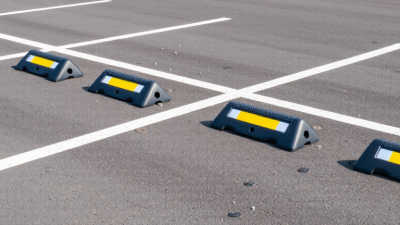
Small details matter. A yellow reflective strip may improve night visibility. A textured surface can support traction during wet weather. Strong anchor points help prevent movement under repeated wheel loads. However, product performance depends on the road surface, vehicle weight, climate, and installation quality. No manufacturer should be judged by price alone.
This ranking is not permanent. Market data, certifications, factory capacity, and customer feedback can change over time. Some suppliers may present impressive specifications that require independent verification. That is worth remembering. Buyers should request current test reports, material information, production photos, and shipment records before making a decision. The following overview aims to help importers, contractors, distributors, and facility managers compare Chinese manufacturers with greater confidence and practical awareness.
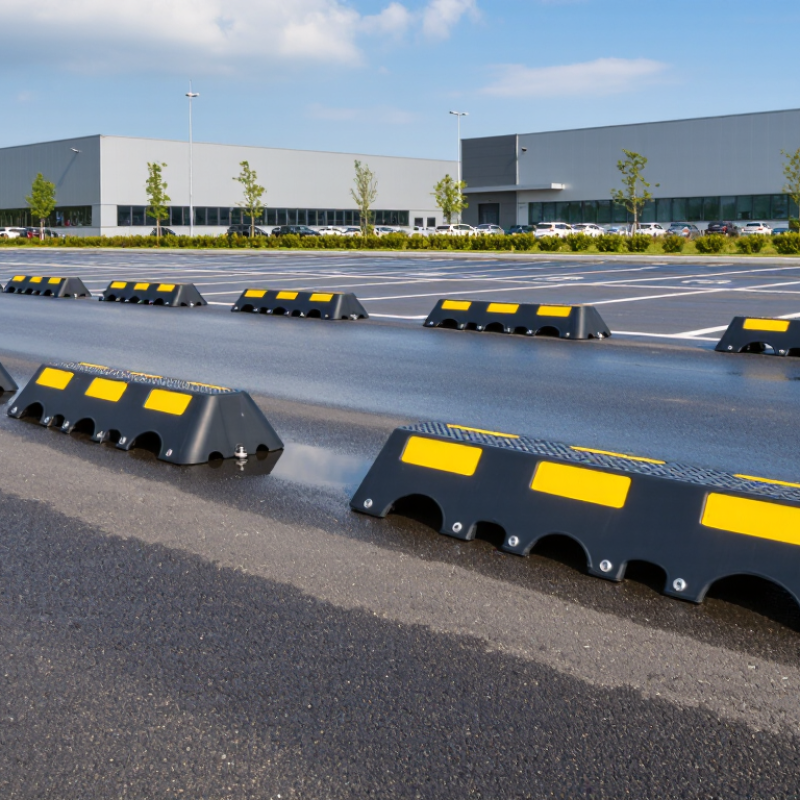
China Top 10 Rubber Speed Hump Manufacturers
China’s rubber speed hump manufacturing industry serves industrial parks, residential roads, schools, warehouses, and private parking areas. Many manufacturers use recycled rubber, reinforced compounds, or weather-resistant formulations. Material choice affects flexibility, noise, service life, and performance in hot or cold conditions.
Experienced factories usually control mixing, molding, curing, drilling, and final inspection in-house. This can reduce dimensional errors between sections. A typical unit may include reflective markings, molded cable channels, and countersunk holes for anchoring. Factory engineers should verify height, ramp angle, load capacity, and surface grip before shipment. Small details matter.
Quality evidence remains important. Buyers should request compound specifications, test records, installation guidance, and samples from different production batches. On-site experience shows that poor anchoring can cause movement, even when the rubber is acceptable. That problem is easy to overlook. Uneven pavement can also create gaps beneath the hump, reducing stability and increasing noise. The industry has improved, but consistency is not perfect across every supplier. Some factories still rely too heavily on visual inspection. More data-based testing would improve reliability. With clear communication and practical inspection, China’s manufacturers can support safer, more durable traffic-calming projects.
| No. | Typical Product Configuration | Height | Overall Width | Module Length | Common Material | Surface Treatment | Approx. Weight per Module | Typical Application |
|---|---|---|---|---|---|---|---|---|
| 1 | Light-duty residential speed hump | 50 mm | 300 mm | 500 mm | Recycled rubber blend | Molded warning stripes | Approximately 8–12 kg | Residential roads and parking areas |
| 2 | Standard modular rubber speed hump | 50 mm | 350 mm | 500 mm | SBR rubber compound | Yellow and black molded pattern | Approximately 10–15 kg | Commercial parking lots |
| 3 | Medium-duty traffic-calming hump | 50 mm | 400 mm | 500 mm | Dense vulcanized rubber | Embedded reflective elements | Approximately 14–20 kg | Factory entrances and internal roads |
| 4 | Heavy-duty commercial speed hump | 75 mm | 400 mm | 500 mm | High-density SBR rubber | Reflective yellow inserts | Approximately 20–28 kg | Warehouses and logistics parks |
| 5 | High-visibility urban road hump | 75 mm | 450 mm | 500 mm | UV-resistant rubber compound | Molded chevron reflectors | Approximately 24–32 kg | Urban access roads and service lanes |
| 6 | Extra-wide low-profile hump | 50 mm | 500 mm | 500 mm | Flexible recycled rubber | Yellow-black surface pattern | Approximately 18–25 kg | Areas requiring gradual vehicle deceleration |
| 7 | Industrial traffic-control hump | 75 mm | 500 mm | 500 mm | High-compression rubber | Steel-reinforced fastening channels | Approximately 28–38 kg | Industrial plants and loading zones |
| 8 | Heavy-vehicle access speed hump | 100 mm | 500 mm | 500 mm | High-density vulcanized rubber | Integrated reflective studs | Approximately 35–48 kg | Ports, yards, and heavy-duty facilities |
| 9 | Custom-width roadway configuration | 50–75 mm | 300–500 mm | 500–1,000 mm | SBR and natural rubber blend | Custom color and reflective markings | Approximately 12–40 kg | Municipal and project-specific installations |
| 10 | Temporary or relocatable speed hump | 50 mm | 300–400 mm | 500 mm | Lightweight rubber compound | High-contrast reflective coating | Approximately 8–18 kg | Events, construction zones, and temporary traffic control |
Choosing among China’s top rubber speed hump manufacturers requires more than comparing prices. The right supplier should show practical experience with parking areas, factories, schools, and private roads. Ask about rubber composition, compression strength, surface texture, and resistance to oil, sunlight, and rain. A reliable manufacturer should provide test reports, product dimensions, load guidance, and clear installation instructions. Certificates matter, but they should support real performance, not replace it.
Inspect the design details closely. Bright reflective markings should remain visible after repeated vehicle contact. Bolt holes must align accurately, and the base should sit firmly on uneven pavement. Request samples before placing a large order. Check production consistency between samples and delivered units. Factory communication also reveals expertise. Clear answers about molds, quality checks, packaging, and replacement policies are valuable. No supplier gets every detail right, so honest discussion of limitations deserves attention.
Tips: Compare at least three suppliers using the same checklist. Request recent project references and installation photos. Confirm delivery dates in writing. Test a small batch on your actual pavement first. A cheaper hump may crack sooner, although that is not always predictable. Review performance after several weeks, then adjust your purchasing decision.
China’s top ten rubber speed hump manufacturers represent different production strengths and market approaches. This profile considers factories with verified operating histories, stable output, and practical export experience. It also examines rubber formulation, mold precision, reflective markings, and load performance.
One manufacturer focuses on dense natural rubber compounds for parking areas. Another develops recycled-rubber products for cost-sensitive projects. A third emphasizes modular designs that simplify replacement. Several factories supply heavy-duty humps for warehouses, residential roads, and logistics yards. Some provide bright yellow and black color combinations for improved visibility. Others specialize in custom lengths, fixing holes, and private project specifications. One profile stands out for laboratory testing, including compression and wear checks. Another has strong quality-control records across different production batches. A smaller factory offers flexible orders but may have limited international documentation. This difference matters.
Experienced buyers should request material data, dimensional drawings, installation guidance, and recent inspection records. Product samples can reveal uneven edges, weak coloring, or unpleasant odor. Ask how the rubber performs under heat, rain, and repeated vehicle impact. A reliable supplier should answer clearly and provide traceable information. Yet documentation alone is not enough. On-site testing remains valuable.
No manufacturer is perfect. Some factories improve design quickly but still need better packaging. Others offer excellent durability but less flexible customization. These limitations deserve honest review. The strongest choice depends on traffic weight, climate, installation surface, and maintenance expectations, not only on price.
Product comparison should begin with material, not appearance. Recycled SBR rubber is cost-effective and absorbs impact well. EPDM offers better resistance to sunlight, ozone, and temperature changes. Polyurethane usually provides stronger wear resistance, but costs more. The International Rubber Study Group reported global natural rubber consumption at approximately 15 million tonnes in 2023. This demand increases pressure to use recycled materials responsibly. Material matters. A speed hump should also resist cracking, deformation, and water entry.
Manufacturing capability separates similar-looking products. Compression molding suits high-volume rubber sections and consistent dimensions. Injection molding can improve surface accuracy and reduce visible defects. Strong factories control compound formulation, curing temperature, hardness, and dimensional tolerance. The FHWA traffic-calming guidance stresses predictable geometry, clear markings, and proper installation. However, many product listings provide limited testing evidence. That is a weakness. Buyers should request hardness data, load testing, aging results, and installation records. A cheap unit may fail at bolt holes first.
Tips: Compare SBR, EPDM, and polyurethane under the same conditions. Check reflective strip adhesion after repeated vehicle contact. Ask whether recycled content is verified. Review production capacity, mold accuracy, and replacement-part availability. Also confirm local road-safety requirements before ordering. The best manufacturer is not always the largest. Reliability depends on documented testing, consistent batches, and practical installation support.
When comparing China’s top ten rubber speed hump manufacturers, begin with verified road-safety data. The WHO Global Status Report on Road Safety 2023 estimates 1.19 million annual traffic deaths worldwide. This figure makes product testing more important than attractive pricing. The FHWA Traffic Calming ePrimer reports typical speed reductions of about 5–7 mph after suitable speed hump installation. Ask each manufacturer for test conditions, vehicle weights, and measured speeds. Marketing photographs are not evidence.
Check the rubber compound, hardness, compression recovery, and surface grip. A reliable supplier should provide batch records and test reports using recognized methods, such as ASTM or ISO standards. Request drawings showing height, ramp angle, bolt positions, and drainage gaps. Confirm whether reflective markings remain visible after abrasion and ultraviolet exposure. Product consistency matters.
Request a pre-production sample before placing a large order. Inspect odor, edge finishing, bolt quality, and alignment on an uneven concrete surface. Ask for factory quality procedures, inspection frequency, mold maintenance, and traceable packaging. ISO 9001 certification can support process control, but it cannot replace independent product testing. I would also compare warranty terms, replacement procedures, export experience, and delivery records. Cheap units may crack quickly in cold weather or deform under heavy trucks. That risk is easy to underestimate. One practical weakness remains: many suppliers provide laboratory results without field data. Require both, then test a small installation before approving the full shipment.