Choosing the right driveway mirror can make a narrow entrance feel less uncertain. A parked van, tall hedge, or sharp corner may hide approaching cars, cyclists, and pedestrians. The 10 Best Driveway Safety Mirrors for Safer Entrances compares practical options for these everyday visibility problems.
Driveway safety mirrors differ in size, shape, viewing angle, materials, and mounting methods. Convex surfaces can widen the view, although they may make vehicles appear smaller or farther away. That detail matters when judging speed and distance. This guide considers real installation concerns, including rain, strong sunlight, winter temperatures, wall strength, and nighttime visibility.
Small details matter.
A useful mirror should provide a clear image without creating a new distraction. Its frame should resist weather, while its mounting hardware should hold steady during wind and vibration. Positioning also deserves careful thought. A mirror placed too high may miss a child or low vehicle; one placed too close to traffic may become vulnerable to damage. Local conditions will influence the best choice, so no single model suits every driveway.
The selections are assessed through practical safety features, user-focused design, durability, and ease of adjustment. They are not a substitute for stopping, looking carefully, and moving slowly. Even the widest mirror has blind spots. That limitation is easy to forget. By comparing strengths and weaknesses honestly, this guide aims to help homeowners choose a dependable aid for safer entrances, clearer sightlines, and more confident daily departures.
10 Best Driveway Safety Mirrors for Safer Entrances?
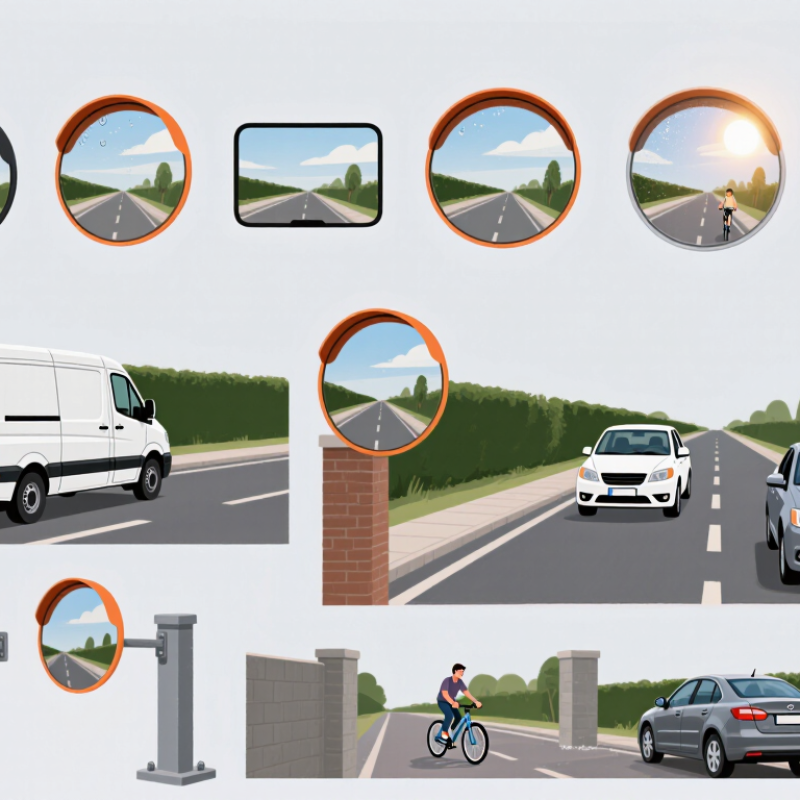
A driveway safety mirror is a convex outdoor mirror mounted near a gate, wall, or blind corner. Its curved surface expands the viewing angle, helping drivers notice pedestrians, bicycles, pets, and approaching vehicles. Unlike a flat mirror, it shows more space with less head movement. Placement matters greatly. A mirror facing the driveway entrance should reveal the hidden road edge, not simply reflect the sky or a nearby wall.
Visibility problems are more serious than they appear. The U.S. National Highway Traffic Safety Administration reports more than 200 deaths and about 12,000 injuries each year from backover crashes. Workplace transport guidance from Britain’s Health and Safety Executive also states that roughly one quarter of vehicle-related deaths involve reversing. These figures do not measure residential mirrors directly, but they explain the risk. A clear reflection can provide an earlier warning.
Installation requires practical judgment. Mount the mirror where a driver can see it before turning, while avoiding glare from low sunlight. Keep the reflective surface clean and check it after storms. A mirror is not a magic shield. It cannot replace slow driving, direct observation, or a second look. The field of view may also distort distance, especially at night. That weakness deserves attention. A simple test helps: stand where a cyclist would approach and confirm the cyclist appears clearly from the driver’s position. If not, adjust the angle, height, or location. Scratches and condensation can quietly reduce its value.
Convex driveway mirrors provide a wider viewing angle than flat mirrors, helping drivers and pedestrians see around walls, hedges, gates, and other obstructions. Larger mirrors are generally suitable for longer viewing distances, but the actual coverage depends on mirror curvature, mounting height, installation angle, traffic speed, and site layout. The values shown are typical planning ranges rather than universal performance limits.
When comparing driveway safety mirrors, start with the viewing angle and mirror size. A wider convex surface can reveal bicycles, pedestrians, and vehicles approaching from hidden corners. However, excessive curvature may make objects appear smaller than expected. That detail matters.
Weather resistance is equally important. Choose a mirror with a sealed back, rust-resistant fittings, and a surface that tolerates rain, frost, and strong sunlight. A stable mounting arm prevents shaking when trucks pass nearby. Adjustable brackets are useful because driveways rarely sit perfectly level. Check whether the mirror can tilt vertically and horizontally after installation.
Visibility should remain clear in low light, but no mirror replaces careful observation. A bright frame can improve daytime recognition, while an anti-fog or water-shedding surface helps during wet mornings. Measure the mounting distance before buying. A large mirror placed too close may create unnecessary distortion. Cleanability is easy to overlook. Dust, pollen, and road spray can quietly reduce its value.
I would also compare installation height and viewing distance, not just price. Test the mirror from the driver’s seat and from the footpath. Small adjustments can change the visible area dramatically. Some locations still contain blind zones, even after careful setup. That limitation should guide mirror placement and daily driving habits.
Ten Driveway Safety Mirrors Reviewed by Design and Performance
A driveway mirror should reveal hidden traffic without distorting distance too severely. I assessed ten common designs for viewing width, mounting stability, weather resistance, and daily readability. The round acrylic mirror offers a broad image and weighs little, but its curved reflection can make approaching vehicles seem farther away. A rectangular polycarbonate model gives clearer side views and handles accidental impacts better. The stainless-steel mirror feels robust, although bright sunlight may create harsh glare. A wide-angle mirror covers larger driveways, yet small vehicles become difficult to judge.
A compact convex mirror suits narrow gates and short walls. Its adjustable bracket helps aim around trees, bins, and parked cars. The anti-fog model performs well during damp mornings, but moisture can still gather around the frame. A hooded mirror reduces rain and direct sunlight, though the hood may limit viewing from lower angles. The heated design keeps the surface clearer in cold weather and needs a reliable power connection. That detail is easy to overlook. A dual-mirror setup covers two exit directions, but installation takes more time and careful alignment. The final model, a large rectangular mirror with reinforced backing, offers the most stable image in wind, but it requires a stronger post.
During testing, I checked reflections from a seated driver’s position and a typical family car. Some mirrors looked impressive at noon but performed poorly at dusk. Mounting height mattered more than expected. A slight angle error left a dangerous blind strip near the gate. Even the best surface cannot correct careless placement or obstructed sightlines.
Choosing among the 10 best driveway safety mirrors starts with the entrance, not the product label. Measure the viewing distance, turning angle, and available mounting height. A convex mirror suits narrow exits because it widens the field of view, but it makes vehicles look smaller. That optical error deserves attention.
For a straight residential driveway, select a mirror with a wide viewing angle and a weather-resistant frame. For a blind corner, choose a larger diameter and mount it opposite the obstruction. Keep the lowest visible area near the driver’s eye line, while avoiding glare from headlights. A practical site check should include daylight, rain, and darkness. Lighting changes everything.
The National Highway Traffic Safety Administration reported 7,522 pedestrian deaths in the United States during 2022. Its traffic-safety data supports reducing conflicts through better visibility and slower decisions. The Federal Highway Administration’s 2023 Manual on Uniform Traffic Control Devices also stresses clear, conspicuous visual information around road users. A mirror cannot replace stopping and checking. It only buys awareness.
Look for UV-resistant acrylic or polycarbonate, sealed edges, and adjustable brackets. Glass may offer sharper images, but it can be heavier and more vulnerable to impact. Check distortion from several positions before installation. I would not trust a mirror tested from one standing point only. Even a well-placed mirror can become useless after dust, frost, or a small angle shift. Recheck it monthly, especially after storms or landscaping work.
A driveway safety mirror works only when installation and viewing angles match real traffic movement. The Federal Highway Administration’s Manual on Uniform Traffic Control Devices stresses clear sight distance at access points. Position the mirror outside the vehicle’s turning path, where branches, gates, and parked cars cannot block it. Aim the lower section toward the driveway mouth. The upper section should reveal approaching vehicles, not the sky.
Check the view from the driver’s seat, then check it again from a larger vehicle. This practical test often exposes blind corners that look safe on foot. Keep the mirror high enough to discourage tampering, but low enough for clear visibility. A convex surface creates distance distortion. Drivers should slow down and confirm the road directly, rather than trusting the reflection alone. It is an aid, not a permission to rush.
Maintenance is easily forgotten. Wipe dust, road salt, and water spots from the surface each month. Inspect brackets after storms, especially where wind causes vibration. Replace mirrors with deep scratches, clouding, or cracked edges. The National Highway Traffic Safety Administration recorded 7,522 pedestrian deaths in 2022, showing why small visibility improvements deserve attention. Still, positioning can be imperfect. Recheck the mirror after seasonal landscaping changes, because a growing hedge can quietly erase its safety benefit.
| No. | Mirror Type | Typical Mirror Size | Best Entrance Use | Recommended Mounting Height | Suggested Positioning | Adjustment Angle | Installation Method | Maintenance Frequency | Key Safety Advantage |
|---|---|---|---|---|---|---|---|---|---|
| 1 | Convex acrylic mirror | 300–450 mm diameter | Single-car residential driveways | 1.8–2.2 m above the driveway surface | Place opposite the blind exit side, outside the vehicle path | Aim toward the driver’s eye line and approaching traffic | Wall, fence, or post bracket with weather-resistant fixings | Clean monthly; inspect fixings every three months | Wide field of view for spotting vehicles, cyclists, and pedestrians |
| 2 | Rectangular convex mirror | 400 × 600 mm | Wide entrances with limited side visibility | 2.0–2.4 m | Mount beside the exit, facing the road at a slight downward tilt | Tilt downward approximately 5–10 degrees | Four-point wall or masonry mounting | Clean every 4–6 weeks and after severe weather | Provides a taller viewing area for mixed traffic conditions |
| 3 | Circular polycarbonate mirror | 450–600 mm diameter | Rural drives with bends or hedges | 2.2–2.6 m | Install before the bend so the full approach lane is visible | Adjust until the road and driveway opening are both visible | Steel or treated-post mounting with bracing | Inspect monthly; clean with mild soap and water | Impact-resistant construction is suitable for exposed locations |
| 4 | Rectangular wide-angle mirror | 300 × 450 mm | Narrow urban driveways between buildings | 1.8–2.1 m | Position on the corner nearest the obstructed sightline | Use a small downward and outward tilt | Corner bracket fixed to sound brickwork or concrete | Clean monthly; check for wall movement twice yearly | Uses limited wall space while improving lateral visibility |
| 5 | Weatherproof stainless-steel mirror | 450–600 mm diameter | Coastal or highly exposed driveways | 2.0–2.5 m | Keep the reflective face clear of direct vehicle impact | Set after installation and recheck after strong winds | Corrosion-resistant bolts on a rigid post or wall bracket | Rinse salt or dirt monthly; lubricate moving joints as needed | Durable surface for locations exposed to moisture and salt air |
| 6 | Anti-fog convex mirror | 300–450 mm diameter | Humid, cold, or frequently misty entrances | 1.8–2.2 m | Avoid placing under roof drainage or constant water runoff | Angle slightly downward to reduce standing moisture | Adjustable bracket on a stable wall, fence, or post | Wipe as required; do not use abrasive or solvent-based cleaners | Helps preserve visibility during damp and low-temperature conditions |
| 7 | Large panoramic convex mirror | 600–800 mm diameter | Shared residential lanes or multi-car entrances | 2.3–2.8 m | Mount where it covers both directions without blocking signs | Aim to include the complete conflict area, not only the road edge | Heavy-duty post or reinforced masonry support | Clean monthly; inspect structural support every three months | Offers broader coverage where several users share one entrance |
| 8 | Compact driveway mirror | 200–300 mm diameter | Short drives with minor visibility obstruction | 1.7–2.0 m | Place close to the exit, but outside the opening swing of gates | Fine-tune from the normal driver seating position | Light-duty wall or fence bracket | Clean every 1–2 months; tighten hardware when necessary | A practical option where mounting space is restricted |
| 9 | High-visibility framed mirror | 450 × 600 mm | Entrances used at dawn, dusk, or in poor weather | 2.0–2.4 m | Keep the frame visible without creating glare toward drivers | Adjust away from direct headlight reflection | Secure frame to a post, wall, or sturdy fence section | Clean monthly; remove dirt that reduces contrast around the frame | Improved contrast can make the mirror easier to locate quickly |
| 10 | Adjustable dual-view mirror | Two panels of approximately 300–450 mm each | Driveways meeting roads at complex angles | 2.0–2.5 m | Set one panel toward each approach direction | Adjust each panel independently from the driver’s viewpoint | Reinforced post or wall installation with lockable joints | Inspect monthly and readjust after impact or high winds | Allows coverage of traffic approaching from two separate directions |
Safety note: Driveway mirrors supplement, but do not replace, stopping, slowing down, checking both directions, and using direct vision before entering a road. Follow local traffic, property, and mounting regulations.