What Are the Top Road Safety Products in 2026?
Road safety products in 2026 range from familiar traffic cones to connected warning systems. The best choice depends on the road, the people using it, and the hazard being addressed. A bright vest can help a roadside worker stand out at dusk. A well-placed barrier can guide drivers around a work area. Small details matter.
This guide examines key product categories, including high-visibility clothing, temporary signs, reflective delineators, warning lights, speed-feedback displays, and vehicle safety equipment. It considers practical factors such as visibility, weather resistance, ease of installation, maintenance needs, and clear manufacturer specifications. Where relevant, buyers should check current local requirements and product testing information, since standards can differ by location and use. Visibility matters.
A product’s price or technology alone does not prove that it will improve safety. Placement, upkeep, training, and road conditions also affect performance. No product is a cure-all. The comparisons ahead aim to explain where each option may help and what questions to ask before choosing one. Some rankings are necessarily imperfect: a device that suits a quiet rural road may not work well beside a busy urban crossing. Readers should treat these recommendations as a starting point, then verify that each product fits the site and its users. Road safety products work best when selected for a real, clearly understood need.
2026 Road-Safety Priorities: WHO Reports 1.19 Million Annual Traffic Deaths
The World Health Organization estimates that road crashes kill about 1.19 million people each year.
That figure makes road safety more than a product trend for 2026. It is a reminder that everyday protection matters, especially where people walk, cycle, or travel in older vehicles. A certified motorcycle helmet and a correctly fastened seat belt can reduce the risk of severe injury. For children, an age- and size-appropriate restraint helps keep them secure during sudden stops.
Small details matter.
Visibility matters.
Reflective clothing, working bicycle lights, and clear road-warning signs can help people notice hazards sooner, particularly at dusk or in rain. In vehicles, reliable tires, functioning headlights, and emergency warning equipment support safer journeys, though they cannot prevent every crash. I sometimes see too much attention given to clever gadgets and too little to basic upkeep. That is worth reconsidering.
A light with a dead battery is only decoration.
Choosing safety products should involve checking recognized safety standards, fit, condition, and instructions—not just appearance or price. Communities also need safer road design, appropriate speeds, and dependable emergency response. Products can help reduce risk, but they work best as part of a broader safety system.
Road deaths remain a painful measure of how much more there is to improve.
Passive Protection: NHTSA Says Seat Belts Cut Fatality Risk by 45%
A seat belt is a simple restraint, but its effect is substantial. NHTSA estimates that wearing one reduces the risk of fatal injury by 45% for front-seat occupants of passenger cars. For people in light trucks, the estimated reduction is 60%. These figures describe reduced risk, not a promise of safety in every crash. Still, the belt across your hips and chest can help keep your body inside the vehicle and spread crash forces.
The gap in real-world use remains stark. NHTSA’s 2022 traffic-safety data show that half of passenger-vehicle occupants killed in crashes were not wearing seat belts. That statistic is hard to ignore. A belt can only protect someone when it is fastened and positioned correctly: the lap portion should sit low across the hips, while the shoulder strap crosses the chest. A twisted strap or one tucked behind the back compromises that fit.
Small habits matter, even on a familiar route. Check that every passenger is buckled before the car moves, and make sure children use a restraint suited to their size. NHTSA’s estimates come from population-level crash data, so they cannot predict what will happen in one specific collision. And seat belts do not prevent crashes. That distinction is easy to forget.
Motorcycle Safety Gear: NHTSA Estimates Helmets Reduce Death Risk by 37%
A motorcycle helmet is the most important piece of protective gear a rider can choose. NHTSA estimates that helmets reduce a rider’s risk of death by 37%. That figure describes a meaningful reduction, not a guarantee. A crash can still cause severe injury, even when a helmet is worn.
Fit matters. The helmet should sit level, feel snug, and stay in place when you gently move your head. Check that its fastener closes securely and that the shell has no cracks or damage. Follow the maker’s care instructions, and replace a helmet after a significant impact. Also check that it meets the safety standards applicable where you ride.
Gloves, sturdy footwear, and abrasion-resistant clothing can help protect skin and joints during a fall. Bright or reflective details may also help riders stand out in dim light. Gear can feel cumbersome on a warm day. That is a real trade-off, but comfort should not mean a loose helmet or bare hands. It is easy to treat safety gear as a checklist; the harder part is wearing it properly on every trip.
Motorcycle Helmets and Estimated Death Risk Reduction
NHTSA estimates that motorcycle helmets reduce the risk of death by 37%. This chart translates that estimate into an index: unhelmeted riders are set at 100, and helmeted riders at 63. The index represents relative risk, not a count of deaths.
Source: National Highway Traffic Safety Administration (NHTSA).
Crash-Avoidance Products: IIHS Links AEB to 50% Fewer Rear-End Crashes
In 2026, automatic emergency braking (AEB) remains one of the most evidence-backed crash-avoidance features. It detects an impending collision and can apply the brakes when the driver does not react in time. Forward collision warning often works alongside it, alerting drivers before braking begins.
The Insurance Institute for Highway Safety’s 2016 analysis of police-reported crashes found that vehicles with forward collision warning and automatic braking had 50% fewer rear-end crashes than comparable vehicles without those systems. The finding gives the headline a solid basis, but it describes real-world crash reductions—not a guarantee for every driver or road. AEB cannot erase risk.
Look for systems that provide clear warnings, automatic braking, and dependable performance at the speeds you commonly drive. A practical check matters: keep cameras and sensors clear of mud, snow, and road grime. Heavy rain, glare, worn lane markings, or a partly blocked sensor may limit detection. Small details count. Drivers should still watch traffic, leave space, and brake when needed. The technology can hesitate, and drivers can too. IIHS crash data supports AEB’s value, but it does not mean every system performs equally in every situation.
What Are the Top Road Safety Products in 2026? — Crash-Avoidance Products and Reported Safety Benefits
| Product or technology |
How it helps |
Reported safety outcome |
Evidence context |
| Automatic Emergency Braking (AEB) |
Detects an impending forward collision and applies the brakes if the driver does not respond in time. |
Vehicles equipped with AEB had about 50% fewer rear-end crashes than comparable vehicles without it. |
IIHS analysis of real-world crash data; the estimate reflects observed crash rates, not a guarantee for an individual vehicle or trip. |
| Forward Collision Warning (FCW) |
Alerts the driver to a possible front-end collision, providing time to brake or steer. |
FCW without automatic braking was associated with about 27% fewer rear-end crashes. |
IIHS real-world study. The reported reduction was lower than the reduction associated with systems that also included AEB. |
| Rear Automatic Braking |
Monitors the area behind a vehicle and can brake to help prevent or lessen a backing collision. |
Vehicles with rear autobrake had about 78% fewer police-reported backing crashes. |
IIHS-HLDI analysis of insurance and crash data. Results may vary with system design and operating conditions. |
| Blind Spot Detection |
Warns the driver when another vehicle is in an adjacent lane’s blind spot, especially during a lane change. |
Associated with about 14% fewer lane-change crashes. |
IIHS-HLDI real-world study of vehicles equipped with blind spot detection. |
| Electronic Stability Control (ESC) |
Helps a driver maintain control by selectively braking wheels when the vehicle begins to skid or veer off the intended path. |
Associated with a 49% lower risk of fatal single-vehicle crashes in cars and a 59% lower risk in SUVs. |
IIHS research comparing vehicles with and without ESC; this is a reduction in risk, not a prediction for every crash scenario. |
Sources: Insurance Institute for Highway Safety (IIHS) and Highway Loss Data Institute (HLDI), published real-world studies on AEB and FCW, rear autobrake, blind spot detection, and electronic stability control. Percentages describe findings from specific study populations and should not be interpreted as guaranteed results.
Road and Work-Zone Products: High-Visibility Gear, Barriers, and Smart Signs
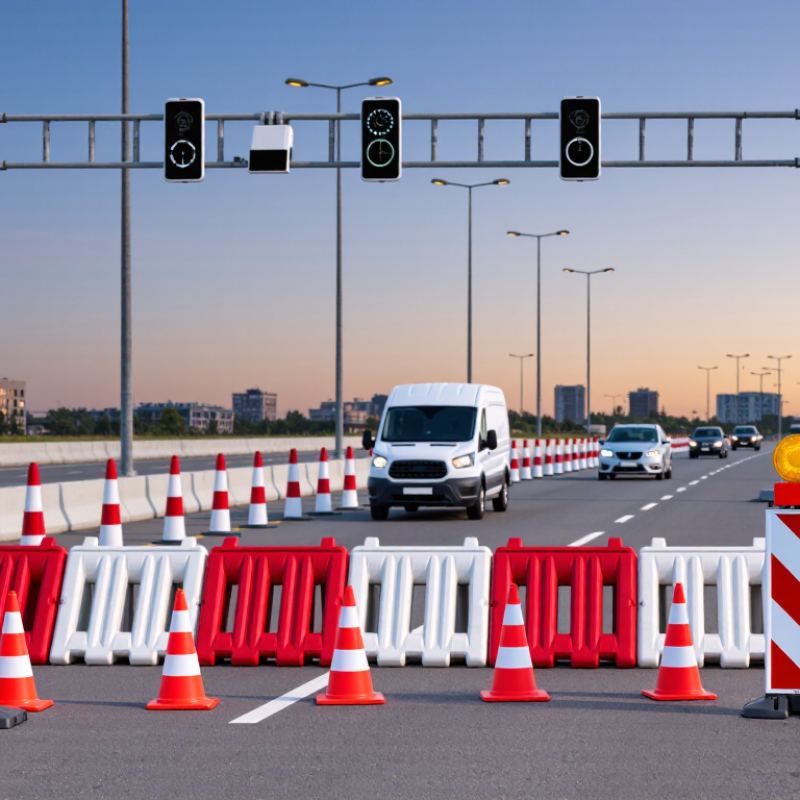
In 2026, effective road and work-zone safety depends on products that people can see, understand, and respond to in time. High-visibility vests with fluorescent fabric and retroreflective bands help crews stand out against gray pavement, especially near moving traffic. FHWA’s FARS-based 2022 work-zone data recorded 891 deaths in work-zone crashes. That figure makes visibility and separation practical priorities, not decorative details.
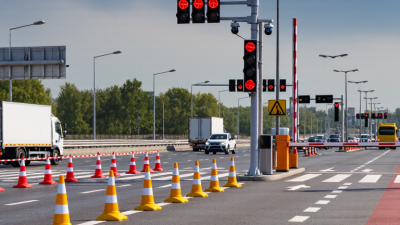
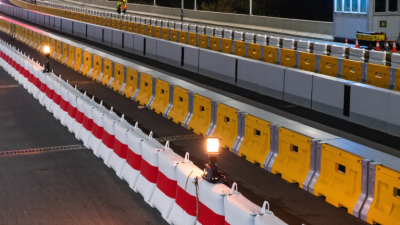
Barriers and channelizing devices guide vehicles around crews and equipment. Their placement should create a clear path, with enough room for drivers to react. Smart signs can display changing speed limits, queue warnings, or lane closures as conditions shift. But a sign can be accurate and still appear too late. Teams should check sightlines, power, message timing, and whether drivers can read the display at approach speed. These checks are easy to miss on a rushed setup.
Tips: Pair bright apparel with well-positioned signs and barriers. Walk the work zone from a driver’s viewpoint before opening it. Replace damaged reflective panels, and record when signs were checked. Small gaps matter. Even careful teams may overlook one.