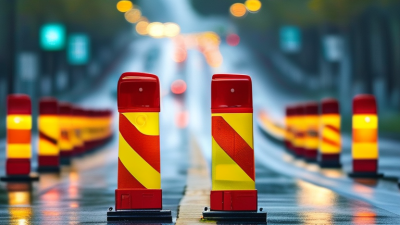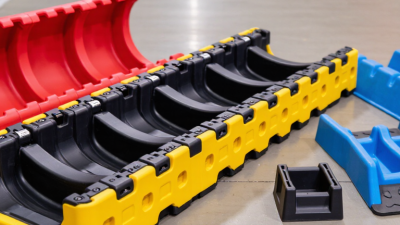
As global roads become busier in 2026, buyers need more than attractive equipment. They need Road safety products that perform under rain, heat, dust, glare, and heavy traffic. This guide examines practical solutions for highways, urban streets, construction zones, schools, and logistics facilities. It focuses on visibility, impact reduction, traffic control, and dependable maintenance.
Dr. Etienne Krug, a leading global road safety expert at the World Health Organization, has stated, “Road traffic injuries are a major public health problem and a leading cause of death and injury worldwide.” His warning gives this market a clear purpose. A reflective road stud is not merely a small plastic device. It must remain visible after repeated vehicle passes. A warning sign needs readable contrast at night. A traffic cone must stay stable when wind pushes across an exposed work zone.
This review considers product materials, visibility ratings, weather resistance, installation requirements, and supplier evidence. It also encourages buyers to verify testing reports, manufacturer records, warranty terms, and local compliance before purchasing. Product names can sound impressive. Real performance may be less certain. No buying guide is flawless, because road conditions vary sharply between regions. A solution suitable for a dry city may fail beside a snowy mountain route. That limitation deserves attention. The best choice balances safety results, lifecycle cost, repair access, and local operating conditions. In 2026, responsible buyers should measure value by fewer risks, clearer guidance, and reliable performance over time.
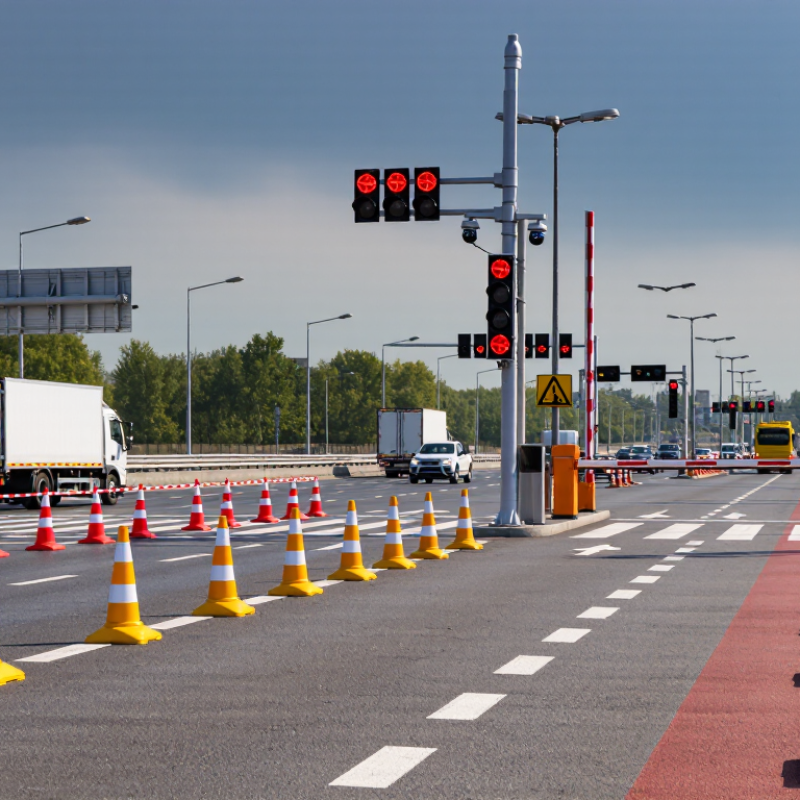
Road safety products are engineered tools that reduce crashes, injuries, and traffic confusion. Definitions matter. A product should support prevention, protection, or post-crash response. The World Health Organization’s Global Status Report on Road Safety 2023 reports about 1.19 million road deaths each year. It also notes that low- and middle-income countries record 92% of deaths, despite having roughly 60% of the world’s vehicles. This imbalance makes practical, affordable equipment essential for global buyers.
Core categories include traffic signs, road barriers, delineators, impact attenuators, speed-control devices, visibility products, and emergency equipment. Signs communicate rules before a decision point. Barriers redirect vehicles and shield exposed areas. Delineators outline lanes during darkness, rain, or dust.
Speed humps reduce approach speeds near crossings. High-visibility clothing and warning lamps help workers remain visible beside moving traffic. Each item has a different function. One product cannot solve every hazard.
Selection requires more than checking a catalogue. Buyers should examine impact performance, retroreflectivity, weather resistance, installation methods, and replacement access. WHO guidance supports safer road design, speed management, and protection for vulnerable users. Field experience also shows a common weakness: equipment may meet a specification but fail after poor installation. That deserves honest review. A barrier placed too close to a hazard can create another risk. A sign hidden by tree branches communicates almost nothing. Local traffic speed, climate, maintenance skills, and user behavior must shape every purchase decision.
Evaluating road safety products starts with the traffic environment, not the catalogue. The WHO Global Status Report on Road Safety 2023 records about 1.19 million annual road deaths worldwide. That figure makes suitability a public-safety question. A reflective lane marker for a dry urban street may perform poorly on a wet rural curve. Buyers should map speed, vehicle mix, lighting, weather, drainage, and maintenance access before comparing prices.
In dense cities, assess pedestrian visibility, night-time contrast, impact tolerance, and installation space. At intersections, test signs and markings from a driver’s actual approach distance. On high-speed roads, examine retroreflectivity, wind resistance, breakaway behavior, and cleaning requirements. For motorcycle-heavy corridors, avoid edges that create sharp hazards after damage. The PIARC Road Safety Manual emphasizes safe-system design, which assumes people will make mistakes. Products should reduce crash severity, not merely look visible.
Use measurable evidence. Request independent test reports, material specifications, service-life data, and performance results after dust, heat, salt, or repeated impact. ISO 39001 can support broader road-traffic safety management, but certification alone does not prove field effectiveness. World Bank road safety guidance also favors data-led risk assessment over isolated equipment purchases. A pilot installation is wise. It may expose glare, poor drainage, or weak visibility that laboratory trials missed. The uncomfortable part is real: procurement teams sometimes trust certificates more than local observation. Recheck performance after one rainy season, then revise the specification.
The chart uses the estimated global distribution of road traffic deaths by road-user group. Buyers should use this evidence when selecting products: pedestrian-heavy locations need high-visibility markings, lighting, crossings and speed-calming equipment; motorcycle-heavy corridors require surface grip, edge protection and impact-absorbing barriers; high-speed roads require durable delineators, guardrails and long-range visibility systems.
Source: World Health Organization, Global Status Report on Road Safety 2023. Percentages represent global estimated shares of road traffic deaths and may vary by country and traffic environment.
For global buyers, road safety products should be selected against documented risks, not attractive specifications. The World Health Organization reports approximately 1.19 million annual road deaths worldwide in its Global Status Report on Road Safety 2023. Products must therefore match local traffic speed, weather, visibility, and maintenance capacity. A reflective sign that performs well in a dry test may fade quickly beside a dusty highway.
Compliance begins with the product category. Traffic signs may require EN 12899-1 or equivalent national standards. Vehicle restraint systems should be assessed against EN 1317, while pavement markings often reference ASTM D6628 or ASTM D4956, depending on product type. ISO 39001 can support an organization’s road traffic safety management system, but it does not certify every physical product. Certification scope matters. Read the test report.
Buyers should request batch traceability, impact results, photometric performance, material data, and installation instructions. For construction-related products in applicable European markets, CE marking and a Declaration of Performance may be required under relevant rules. Other markets can demand separate approvals. Check the destination country before shipment. A certificate from one jurisdiction may have limited value elsewhere. That is easy to overlook.
Field conditions deserve equal attention. Ask whether barriers resist repeated impacts, whether solar warning devices remain visible after cloudy days, and whether replacement parts are locally available. The International Transport Forum’s road safety work repeatedly links safer infrastructure with systematic risk management, not isolated equipment purchases. Documentation can be incomplete. Independent verification remains sensible. A cheaper product may become expensive after one failed installation.
| Product Category | Typical Road-Safety Function | Key International or Regional Standards | Common Compliance Evidence | Main Buyer Verification Points | Primary Markets |
|---|---|---|---|---|---|
| Fixed Vertical Road Traffic Signs | Communicate regulatory, warning, and directional information to road users. | EN 12899-1 ISO 7591 MUTCD | Declaration of Performance where the Construction Products Regulation applies; product test reports; visibility and durability documentation. | Retroreflective performance, wind-load resistance, corrosion protection, colour coordinates, legibility, mounting system, and national sign-design requirements. | European markets, the United States, Canada, and other countries using equivalent national sign systems. |
| Retroreflective Sheeting and Sign Face Materials | Improve sign visibility during nighttime and low-light conditions. | ASTM D4956 EN 12899-1 ISO 7591 | Independent photometric test reports; colour and weathering test results; technical data sheet; batch traceability records. | Coefficient of retroreflection, colour durability, adhesion, impact resistance, temperature range, UV ageing, and compatibility with the sign substrate. | North America, Europe, the Middle East, Asia-Pacific, and other markets requiring retroreflective traffic signs. |
| Road Marking Paints, Thermoplastics, and Cold Plastics | Provide lane separation, edge guidance, pedestrian crossing markings, and hazard indication. | EN 1436 EN 1871 ASTM D6628 ASTM D7585 | Performance test reports; skid-resistance data; night-visibility measurements; environmental and chemical safety documentation. | Daytime colour, nighttime retroreflection, skid resistance, wet-weather visibility, wear resistance, application thickness, curing time, and surface compatibility. | European markets, North America, Australia, and road authorities using equivalent performance specifications. |
| Road Studs and Raised Pavement Markers | Provide continuous lane guidance and visual or tactile delineation. | EN 1463-1 EN 1463-2 ASTM D4280 | Photometric test results; abrasion and impact test reports; installation instructions; adhesive compatibility data. | Retroreflection, colour, resistance to vehicle impact and abrasion, optical performance after contamination, drainage design, and load-bearing capacity. | Europe, the United States, Canada, Australia, and other markets using raised pavement markers. |
| Traffic Cones, Delineators, and Temporary Channelizing Devices | Guide traffic safely through work zones, lane closures, and temporary diversions. | EN 13422 EN 12899-1 MUTCD NCHRP 350 / MASH | Dimensional inspection; material and colour test reports; retroreflectivity results; impact or crash-test evidence where applicable. | Height and base dimensions, stability in wind, visibility, flexibility at low temperatures, fluorescent colour, reflective bands, and safe deformation. | Europe, North America, Australia, and international construction-zone markets. |
| Vehicle Restraint Systems and W-Beam Barriers | Contain or redirect errant vehicles and reduce the severity of roadside impacts. | EN 1317-1 EN 1317-2 EN 1317-5 MASH | Full-scale crash-test reports; performance classification; installation and foundation design; factory production-control records. | Containment level, working width, dynamic deflection, impact severity, installation geometry, terminals, transitions, post spacing, and corrosion protection. | European markets, the United States, Canada, the Middle East, and other markets adopting EN or MASH-based systems. |
| Crash Cushions and Energy-Absorbing Terminals | Protect motorists from impacts with barrier ends, fixed hazards, and gore areas. | EN 1317-3 EN 1317-4 MASH | Full-scale crash-test certification or approval; installation drawings; repair and replacement procedures; maintenance records. | Design speed, redirection capability, containment level, impact severity, lateral clearance, anchorage, replacement parts, and site-specific configuration. | Europe, North America, and countries requiring tested roadside safety hardware. |
| Pedestrian and Cyclist Safety Barriers | Separate pedestrians or cyclists from moving traffic and guide movement at crossings or work zones. | EN 1317-2 EN 1317-5 BS 7818 Local accessibility codes | Structural calculations; impact or load test reports; corrosion-resistance evidence; accessibility and visibility assessment. | Anchorage, load capacity, entrapment risk, sharp-edge control, visibility, pedestrian clear width, wheelchair access, and maintenance requirements. | Europe, the United Kingdom, Australia, New Zealand, and other urban infrastructure markets. |
| Traffic Signal Heads and Warning Lights | Control right of way and provide conspicuous warnings at intersections, crossings, and hazards. | EN 12368 EN 12352 EN 12675 MUTCD | Electrical safety and EMC test reports; photometric test results; ingress-protection rating; control-system compatibility documentation. | Light intensity, colour, visibility angle, LED failure behaviour, environmental rating, power consumption, EMC performance, and emergency operation. | Europe, North America, Australia, and markets using signal-control systems based on equivalent requirements. |
| Variable Message Signs and Portable Electronic Boards | Display temporary or real-time warnings, travel information, speed restrictions, and diversion instructions. | EN 12966 EN 12899-1 MUTCD IEC 60529 | Performance classification; photometric and electrical test reports; software or cybersecurity documentation where connected; battery and charging records. | Message legibility, luminance, contrast, viewing angle, display failure mode, wind stability, enclosure rating, power autonomy, and remote-access security. | Europe, North America, Australia, smart-road infrastructure markets, and temporary work-zone applications. |
| Speed Feedback Displays and Roadside Detection Devices | Alert drivers to speed behaviour and support traffic monitoring or enforcement operations. | EN 301 489 IEC 61000 IEC 60529 Local radio regulations | EMC and radio-equipment conformity assessment; accuracy test reports; calibration records; data-protection documentation where personal data is processed. | Speed-measurement accuracy, radar or sensor frequency approval, display visibility, cybersecurity, weather resistance, calibration interval, and privacy compliance. | Europe, North America, Asia-Pacific, and intelligent transport system markets. |
| Roadside Delineator Posts and Hazard Markers | Define road edges and identify curves, culverts, bridge approaches, and roadside hazards. | EN 12899-1 EN 13422 ASTM D4956 | Material durability reports; retroreflectivity measurements; dimensional inspection; UV and temperature-cycling results. | Visibility at night, flexibility, impact recovery, resistance to UV and de-icing chemicals, anchorage, colour stability, and replacement availability. | Europe, North America, Australia, New Zealand, and rural-road infrastructure markets. |
Selecting road safety products for global procurement requires more than comparing unit prices. Buyers should match each product to road speed, traffic volume, weather, and installation conditions. A reflective delineator for a dry highway may fail quickly in coastal air or heavy snow. Fit matters.
Review impact resistance, visibility distance, material composition, and replacement requirements before ordering. Ask suppliers for independent test reports, installation instructions, and batch inspection records. Products should remain visible under headlights, rain, dust, and low temperatures. Check whether dimensions match local road designs and maintenance equipment.
Logistics also deserves close attention. Confirm packaging strength, container loading plans, delivery terms, and spare-part availability. A damaged barrier can delay an entire work zone. Document everything.
Procurement teams should test samples in realistic conditions, not only in a warehouse. One small field trial may reveal weak anchors, fading markings, or confusing instructions. That lesson can be uncomfortable, but ignoring it costs more.
Product selection should also consider worker handling, cleaning needs, and disposal procedures. Lower prices sometimes hide shorter service life and higher replacement labor. Tender documents should define measurable performance requirements, inspection methods, and acceptable tolerances. Recheck the assumptions. Roads change, and procurement specifications should change with them.
Installation determines how well a road safety product performs over time. Before delivery, buyers should confirm dimensions, mounting methods, visibility requirements, and local environmental conditions. A reflective sign may work well in a dry region but lose clarity under dust, rain, or coastal salt. Installers should use calibrated tools, stable foundations, and documented torque settings. Small errors matter. A tilted warning sign can reduce driver reaction time.
Maintenance needs a practical schedule, not occasional attention. Teams should inspect fasteners, reflective surfaces, batteries, sensors, and drainage points. Cleaning records can reveal repeated failures near construction zones or busy intersections. Damaged parts should be photographed and logged before replacement. This creates traceable evidence for future purchasing decisions. However, even detailed schedules can miss hidden corrosion. Direct inspection remains necessary.
Tips: Measure visibility at night, not only during daylight. Test alarms and flashing systems during realistic traffic conditions. Compare performance data across seasons and locations. Track false alerts, downtime, response time, and power consumption. Keep spare components in dry, labeled storage. Train local technicians with clear diagrams and short checklists. Review results with road authorities and maintenance contractors. Avoid assuming one installation method suits every country. Feedback from field workers often exposes problems that laboratory tests overlook.