Choosing the right parking lot barrier is more important than it appears. A poorly designed stop can shift, crack, or damage tires during daily use. The best Rubber wheel stops provide a clear parking boundary without creating unnecessary hazards for drivers, pedestrians, or maintenance crews.
This guide reviews ten practical options for commercial lots, apartment buildings, retail centers, and private facilities. Each product is considered for material quality, visibility, mounting strength, drainage performance, and long-term weather resistance. Details such as reflective strips, rounded edges, pre-drilled holes, and included hardware can make a noticeable difference during installation. A stop that looks strong online may feel surprisingly light on site.
Real-world performance also depends on the pavement beneath it. Asphalt, concrete, slopes, and frequent delivery traffic can change the result. We consider those conditions rather than treating every parking space the same. Installation experience shows that even a durable stop can fail when anchors are poorly positioned or the surface is damaged.
Not every choice will suit every lot. That is worth remembering. Some products prioritize affordability, while others offer heavier construction and better visibility. Our comparisons aim to help property managers, contractors, and facility owners make a dependable decision. We also acknowledge a common limitation: product specifications do not always reveal how a wheel stop performs after years of heat, rain, oil exposure, and repeated vehicle contact.
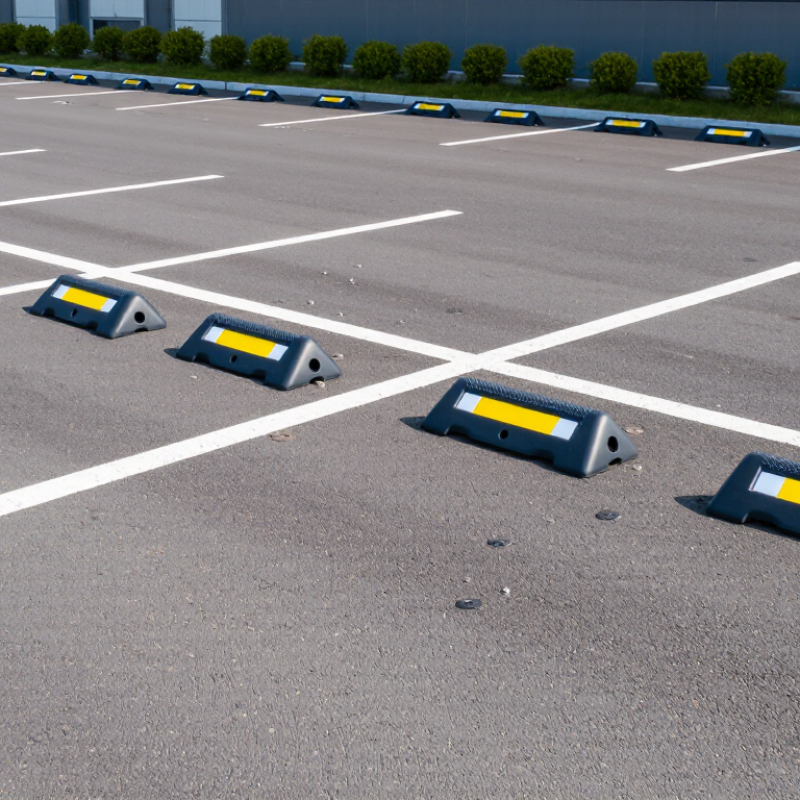
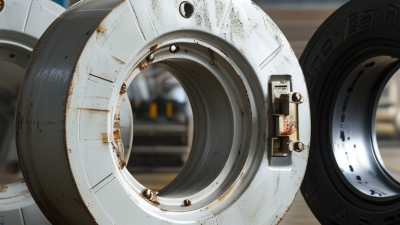
Rubber wheel stops are compact parking barriers placed at the front of a vehicle space. They help drivers stop at a controlled distance from walls, sidewalks, fences, and neighboring vehicles. Most models contain molded rubber, reflective strips, and mounting holes. Their flexible material absorbs minor tire contact better than rigid concrete. It also reduces chipping and sharp debris in busy parking areas. When a tire touches the stop, the barrier creates resistance and gives the driver a clear physical signal. The vehicle should stop gently, not climb over it.
The best rubber wheel stops match the site, vehicle type, and pavement condition. A professional installer checks the stop’s height, length, anchor layout, and visibility before drilling. Uneven asphalt can weaken anchors, even when the product appears strong. Reflective markings improve nighttime recognition, but dirt can quickly hide them. Drainage matters too. Water trapped around fasteners may cause premature movement or corrosion. I have seen parking layouts fail because spacing was measured from the wrong reference point. Small errors become frustrating when doors cannot open fully. Regular inspections should check loose bolts, cracks, fading, and displaced units.
Tips: Measure each bay carefully. Leave enough room for accessible paths and vehicle overhangs. Use suitable anchors for the pavement. Clean reflective areas often. Do not assume heavier is always better.
10 Best Rubber Wheel Stops for Parking Lots: Key Features to Compare Before Choosing
Choosing a rubber wheel stop involves more than checking its length. Start with impact performance, density, and recovery after repeated contact. A well-made stop should resist cracking, oil exposure, ultraviolet light, and winter temperature changes. Look for molded-in reflective strips or bright markings. Drivers often notice contrast before shape. The National Highway Traffic Safety Administration estimates that backover crashes cause about 284 deaths and 12,000 injuries annually, showing why clear parking-lot boundaries matter (NHTSA, Traffic Safety Facts). A wheel stop cannot prevent every collision, though. That assumption needs challenging.
Compare mounting holes, anchor compatibility, and surface contact. Longer stops can guide larger vehicles, but they may create trip hazards if placed poorly. Check the product’s height and setback against the site’s accessibility plan and local requirements. The Federal Highway Administration’s Manual on Uniform Traffic Control Devices emphasizes consistent, visible traffic-control treatments. Rubber also offers a sustainability advantage: the U.S. Environmental Protection Agency reported 303.2 million scrap tires generated in 2021, with 71.6% directed to beneficial uses. Recycled content is useful, but verify durability rather than trusting the label.
Tips: Measure each parking bay first. Inspect anchors after installation. Test visibility at dawn, midday, and during rain. Avoid stops with sharp edges or distorted bases. Also record cracking and movement during monthly inspections; real sites are messier than product photos.
This chart presents a practical evaluation weighting for comparing rubber wheel stops. Impact resistance, anchoring security, visibility, weather resistance, installation effort, and drainage are key factors when selecting a durable parking-lot wheel stop. The percentages represent suggested purchasing priorities rather than scores for any specific company or brand.
Ten effective rubber wheel stop options can suit different parking layouts and traffic demands. Recycled-rubber stops offer strong impact absorption and reduce cracking during temperature changes. Molded heavy-duty stops work well in busy commercial lots. Reflective stops improve visibility during rain or nighttime use. Bolt-down models provide dependable placement on asphalt or concrete. Cable-linked stops help maintain alignment across wider spaces. Portable stops suit temporary parking arrangements. Corner stops protect walls and structural edges. Low-profile stops reduce tire impact in smaller vehicles. Extra-wide stops offer better guidance for trucks and larger cars. No option is perfect.
In my experience, installation quality matters as much as material choice. A poorly anchored stop can shift, split, or create a trip hazard. Measure each parking bay before selecting its length and height. Check the surface condition, drainage pattern, and expected vehicle size. Rubber should remain visible, especially near faded pavement markings. Reflective panels may need regular cleaning to stay effective. Choose corrosion-resistant anchors where moisture is common. Local accessibility and installation requirements should also guide placement. I have seen attractive products fail because the anchors were too short.
Tips: Keep wheel stops aligned with stall lines. Leave safe clearance from pedestrian paths. Inspect loose bolts after heavy rain or snow. Replace damaged reflectors quickly. Test one unit before ordering many. That small trial can prevent an expensive mistake.
When comparing the ten best rubber wheel stops, installation quality often matters more than appearance. Choose dense, weather-resistant rubber with visible reflective markings. Measure each parking bay before drilling. The stop should sit squarely across the space, with enough clearance for tires and pedestrian movement. Local accessibility and fire-safety requirements may affect the exact position. Check them before work begins.
Use suitable anchors for the pavement surface. Concrete usually needs expansion or sleeve anchors, while asphalt may require specialized anchoring methods. Clean dust from every hole before fastening. Tighten bolts evenly, but avoid crushing the rubber. Uneven pressure can create gaps beneath the stop. A straight chalk line helps maintain consistent placement across a row. It sounds simple. It prevents crooked bays.
I once saw stops installed too close to a drainage channel, where trapped water weakened the pavement around the anchors. That assumption was wrong. Leave space for water flow and inspect the surface after heavy rain. Check loose bolts, cracked rubber, faded reflectors, and lifted edges each month. Replace damaged units before tires repeatedly strike them. Sweep away gravel, oil, and winter debris. Do not paint over reflective areas. Record inspection dates, repairs, and unusual impact marks. These small records can reveal repeated parking errors or a poorly chosen position.
| No. | Rubber Wheel Stop Type | Best Application | Typical Dimensions | Recommended Placement | Installation Method | Key Advantages | Maintenance Guidelines | Estimated Service Life |
|---|---|---|---|---|---|---|---|---|
| 1 | Standard Recycled-Rubber Stop | General parking spaces in retail lots, offices, and residential properties | Approx. 1,650–1,830 mm long × 150–165 mm wide × 100–115 mm high | Center across the parking bay, positioned perpendicular to the vehicle | Anchor bolts installed through pre-molded holes into sound asphalt or concrete | Flexible, highly visible, quieter than concrete, and resistant to cracking | Inspect anchors twice a year; retighten loose hardware and replace damaged reflectors | About 5–10 years with regular inspection |
| 2 | Heavy-Duty Rubber Stop | Commercial facilities, delivery areas, and high-traffic parking lots | Approx. 1,830–2,440 mm long × 150–180 mm wide × 100–150 mm high | Place uniformly at the front of each designated parking stall | Use multiple galvanized or stainless-steel anchors selected for the pavement type | Greater mass and impact resistance for frequent vehicle movements | Check for movement, anchor corrosion, splitting, and deformation every 3–6 months | About 7–12 years, depending on traffic and climate |
| 3 | Low-Profile Rubber Stop | Compact cars, low-clearance vehicles, and areas where trip hazards must be minimized | Approx. 1,650–1,830 mm long × 150 mm wide × 75–100 mm high | Install within the stall, leaving adequate clearance from sidewalks and wheel paths | Secure with pavement-compatible anchors; verify the surface is level before drilling | Reduced bumper contact risk and lower visual obstruction | Keep the surface clean and confirm that the stop remains level and firmly anchored | About 5–8 years under moderate use |
| 4 | High-Visibility Reflective Stop | Night-time parking, poorly lit lots, hospitals, and pedestrian-heavy locations | Approx. 1,650–1,830 mm long × 150–165 mm wide × 100–115 mm high | Align with the stall markings and face reflective panels toward approaching traffic | Anchor through factory holes; avoid covering reflectors with paint or sealant | Improves visual guidance and helps drivers identify the stall endpoint | Wash reflectors periodically and replace units when reflective surfaces become heavily worn | About 5–10 years; reflector visibility may decline sooner |
| 5 | Accessible-Space Wheel Stop | Accessible parking spaces where vehicle overhang must be controlled | Commonly 1,650–1,830 mm long × 150–165 mm wide × 100–115 mm high | Follow the applicable accessibility standard and preserve the required access aisle | Install flush and securely; confirm that the stop does not reduce the accessible route width | Helps prevent vehicles from intruding into sidewalks or pedestrian circulation areas | Inspect after pavement repairs and verify that the stop has not shifted into the access aisle | About 5–10 years when correctly installed |
| 6 | Heavy-Vehicle Rubber Stop | Parking areas serving vans, pickup trucks, and light commercial vehicles | Approx. 1,830–2,440 mm long × 180–200 mm wide × 125–150 mm high | Position according to the expected tire contact point and available vehicle overhang | Use a reinforced anchor layout and verify that the pavement can hold the loads | Provides stronger resistance to repeated tire impacts and heavier vehicles | Inspect anchor holes and end sections for crushing, tearing, or pullout damage | About 6–12 years, subject to vehicle weight and impact frequency |
| 7 | Modular Interlocking Rubber Stop | Large lots requiring flexible layouts or quick replacement of damaged sections | Individual sections commonly 450–900 mm long; assembled lengths vary | Maintain a continuous, straight line across the parking bay | Connect adjoining sections and anchor the complete assembly to the pavement | Easy to transport, configure, replace, and adapt to different stall widths | Check connectors for separation and ensure adjoining sections remain aligned | About 5–10 years with proper connection and anchoring |
| 8 | Drainage-Channel Rubber Stop | Parking spaces where surface-water flow must be maintained | Approx. 1,650–1,830 mm long × 150–180 mm wide × 100–115 mm high | Place without blocking designed drainage paths, inlets, or pavement cross-falls | Anchor at designated points while keeping drainage openings free of debris | Supports wheel guidance while allowing water to pass beneath or through the design | Clear leaves, sediment, and ice from channels; inspect after heavy rainfall | About 5–10 years, depending on water, ice, and de-icing exposure |
| 9 | Temporary or Portable Rubber Stop | Events, seasonal parking, construction sites, and short-term traffic layouts | Approx. 900–1,830 mm long × 150–180 mm wide × 75–115 mm high | Place on a stable, clean surface and align with temporary stall markings | Use weighted or removable anchoring where permitted; do not leave unsecured units in traffic lanes | Fast deployment, easy relocation, and minimal permanent pavement alteration | Reposition after vehicle contact and store indoors or under cover when not in use | About 3–8 years, depending on handling and outdoor exposure |
| 10 | Custom-Length Rubber Stop | Nonstandard stalls, angled parking, loading-adjacent spaces, and retrofit projects | Commonly 900–2,440 mm long; height and width vary by design | Set out from the site plan so the stop controls the tire position without obstructing walkways | Confirm hole spacing and use anchors suitable for concrete or asphalt conditions | Adapts to unusual site geometry and can reduce unnecessary overhang | Check end caps, cut edges, alignment, and anchor tension during routine inspections | About 5–10 years with suitable sizing and installation |
10 Best Rubber Wheel Stops for Parking Lots?
Safety, Durability, and Cost Considerations
The best rubber wheel stops balance visibility, impact resistance, installation, and price. Ten strong choices usually include recycled rubber models, molded rubber units, reflective versions, heavy-duty parking blocks, and compact stops for tight spaces. Each design serves a different parking environment.
Rubber absorbs impact better than concrete and reduces damage to tires, bumpers, and floors. Look for dense material, UV resistance, drainage channels, and bright reflective panels. A stop should remain stable during repeated contact. Anchoring matters too. Asphalt and concrete need different fasteners, so installation should follow the manufacturer’s specifications. Poor anchors can turn a safe product into a loose obstacle.
In real parking areas, I check the stop from a driver’s viewpoint, not only from a product sheet. A six-inch profile may protect a wall, but it can become difficult to see in rain or dim lighting. Some recycled rubber products have strong performance but uneven color. That is not always a problem, though appearance may matter in public facilities. Cost comparisons should include anchors, labor, replacement frequency, and cleaning. The cheapest unit may become expensive after one harsh winter.
Tips: Choose reflective markings for low-light areas. Measure stall depth before installation. Keep stops clear of loose gravel and standing water. Inspect cracks, faded panels, and missing anchors every few months. A small alignment error can affect several parking spaces. Safety deserves another look.