China Top Temporary Traffic Barriers Suppliers

China has become an important sourcing market for Temporary traffic barriers, serving road contractors, event organizers, airports, and infrastructure projects. However, supplier selection should involve more than comparing prices or product photographs. Barrier performance depends on tested design, impact resistance, connection strength, visibility, and installation accuracy.

Gerald L. Ullman, Ph.D., P.E., a respected work-zone safety researcher, has said, “Work zones are dynamic environments, and safety must be considered for both workers and motorists.” This principle remains practical when evaluating Chinese manufacturers. A reliable supplier should provide clear technical drawings, material specifications, crash-test documentation, quality-control records, and installation guidance. Ask for production samples, not only catalog images. Inspect reflective sheeting, base stability, locking pins, and drainage details.

Small details matter.

For example, a temporary barrier placed beside a narrow night lane needs strong reflectivity and consistent spacing. A water-filled unit requires leak-resistant molding and secure filling access. Steel systems need corrosion protection, accurate welding, and compatible connectors. These points can reveal manufacturing weaknesses before delivery.

Buyers should also confirm applicable standards, such as MASH, NCHRP 350, EN 1317, or project-specific requirements. Certification alone is not enough. Test scope, product configuration, and installation conditions must match the intended use. This is where many purchasing plans become too optimistic.

The best China suppliers combine engineering support with traceable production. Factory audits, third-party inspections, and small pilot orders can reduce uncertainty. Still, no supplier list should replace site assessment. Temporary traffic barriers protect people only when the selected system suits the road, risk, and operating environment.

China Top Temporary Traffic Barriers Suppliers

Temporary Traffic Barriers: Purpose, Types, and Applications

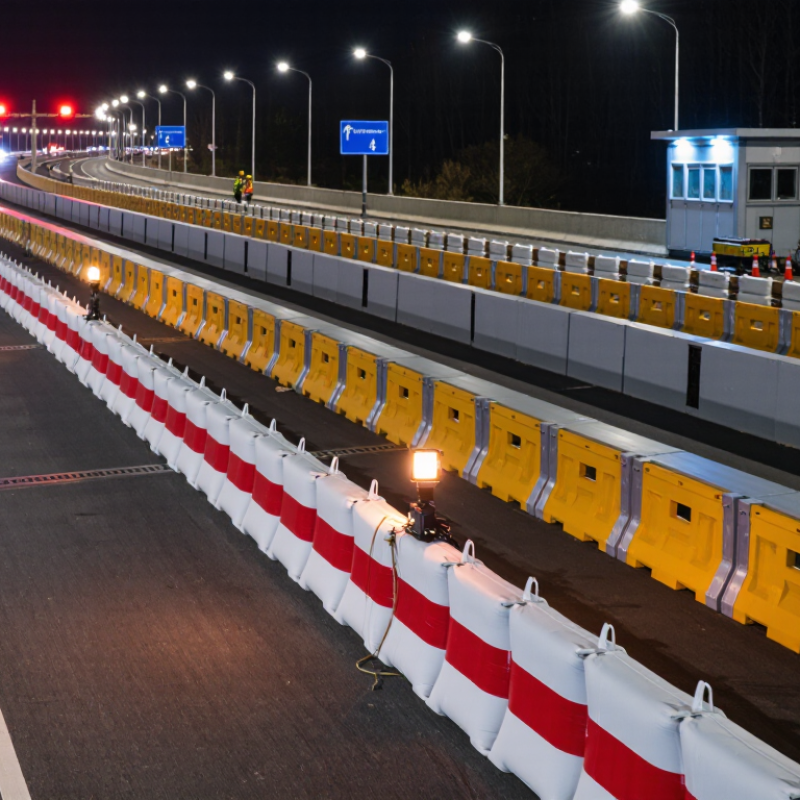
Temporary traffic barriers create a visible, physical boundary around changing road conditions. They guide drivers, protect workers, and separate vehicles from open work areas. Their value depends on correct placement, not appearance alone. In practice, crews assess traffic speed, lane width, turning paths, drainage, and pedestrian movement before installation. A barrier that looks strong may still fail when poorly connected or positioned. Temporary systems also support events, utility repairs, bridge maintenance, and emergency access routes. They are not permanent walls. Their design allows planned movement as site conditions change.

Common types include water-filled plastic barriers, steel barriers, concrete barriers, and modular pedestrian systems. Water-filled units are easier to transport and can reduce impact severity when properly filled. Steel systems suit locations needing compact strength and repeated installation. Concrete units offer high mass but require suitable lifting equipment and stable ground. Pedestrian barriers need continuous guidance, detectable edges, and enough space for mobility devices. On a narrow urban road, modular units may protect workers while preserving a controlled walking route. On a high-speed project, engineers may select tested impact-rated systems and suitable end treatments. Selection should follow the project risk assessment and local requirements.

Tips: Inspect connections, ballast levels, reflectors, and anchor points each shift. Keep warning signs visible after rain, dust, or vehicle movement. Record damage immediately. Do not mix incompatible modules. Leave emergency access clear. Review the layout when traffic patterns change. This step is easy to forget. It should not be.

Key Features of China’s Temporary Traffic Barrier Industry

China Top Temporary Traffic Barriers Suppliers

Key Features of China’s Temporary Traffic Barrier Industry

China’s temporary traffic barrier industry combines large-scale manufacturing with flexible customization. Suppliers commonly produce water-filled plastic barriers, galvanized steel units, and modular pedestrian systems. Many factories adjust barrier length, color, connector design, and reflective markings for different work zones. A typical water-filled barrier is light during transport but becomes stable after filling. This detail matters on narrow urban roads.

Material selection is a practical concern. High-density polyethylene resists impact, moisture, and repeated outdoor use. Galvanized steel offers stronger resistance in areas facing frequent contact or heavy equipment movement. Reliable suppliers should provide material data, dimensional drawings, test records, and sample inspections. They should also explain drainage, stacking, filling, and repair procedures clearly.

Small details matter. A loose connector can create movement between sections.

Manufacturing experience supports better quality control, especially when suppliers inspect wall thickness, weld points, base stability, and reflective film adhesion. Buyers should review production samples instead of trusting photographs alone. However, not every low-cost barrier suits every project. Water-filled products may perform poorly if filling levels are ignored, while steel barriers can increase handling time.

I have found that site conditions, delivery distance, local safety requirements, and installation training often influence performance more than appearance.

Some specifications still need careful review. Supplier communication can be fast, but technical documents are not always equally complete.

How to Evaluate China-Based Temporary Traffic Barrier Suppliers

Evaluating China-based temporary traffic barrier suppliers starts with evidence, not polished product photos. Ask for factory videos, material specifications, load-test records, and recent project references. A reliable supplier should explain barrier dimensions, base weight, connection methods, and surface treatment clearly. Look for practical experience with highways, event zones, construction entrances, and harsh weather. Details matter. Vague answers often indicate weak process control.

Request a sample before approving a large order. Inspect welds, reflector visibility, drainage holes, caster movement, and plastic or steel thickness. Measure the sample yourself, because catalog tolerances may not match production. Ask how raw materials are traced and how rejected units are separated. A competent factory can provide inspection records from incoming materials through final packing. It should also describe corrective action when a batch fails. This is where many evaluations become too optimistic. A friendly sales conversation is not quality assurance.

Confirm production capacity using a dated schedule, not a monthly promise. Clarify tooling ownership, packaging strength, spare-part availability, and shipping documents before payment. Use a written specification with drawings, colors, quantities, and acceptance criteria. Independent pre-shipment inspection adds useful distance from the supplier. Communication quality deserves testing. Send the same technical question to different contacts and compare their answers. If responses change, pause and investigate. A recurring lesson in supplier reviews is that low prices can hide thinner walls, weaker bases, or expensive rework. That lesson is inconvenient, but useful.

China Top Temporary Traffic Barriers Suppliers - How to Evaluate China-Based Temporary Traffic Barrier Suppliers

Evaluation Dimension Recommended Weight What to Verify Acceptable Evidence Scoring Guide
Applicable Safety Standards 20% Whether the proposed barrier has been evaluated against the standard required for the project location and road authority. Current test reports, certification documents, test configuration, impact conditions, product drawings, and installation requirements. Common references may include EN 1317, MASH, or applicable local highway standards. 5 = Relevant, independently verifiable test evidence; 3 = Partial evidence; 1 = Marketing claims only.
Barrier Type and Intended Use 10% Suitability of the design for work zones, lane separation, pedestrian protection, temporary road closures, or channelization. Technical datasheet stating whether the product is water-filled, polymer, steel, concrete, or another design, together with the intended application and limitations. 5 = Clearly matched to the application; 3 = Requires adaptation; 1 = Intended use is unclear.
Material and Environmental Resistance 10% Resistance to ultraviolet exposure, temperature changes, moisture, corrosion, impact, and the chemicals normally encountered in service. Material specification, UV-resistance information, corrosion-protection details, environmental test records, and stated operating temperature range. 5 = Suitable evidence for the project climate; 3 = Limited evidence; 1 = No documented resistance data.
Dimensions and Installation 10% Overall dimensions, connection method, ballast requirements, anchoring method, transition details, and compatibility with the available work-zone layout. Dimensioned drawings, installation manual, connection details, ballast or anchoring calculations, and photographs of completed installations. 5 = Complete and project-compatible documentation; 3 = Minor information gaps; 1 = Installation method is undefined.
Visibility and Roadside Delineation 8% Visibility during daylight and darkness, reflective elements, color consistency, warning markers, and compatibility with local traffic-control requirements. Reflective-material specification, photometric or retroreflectivity information where required, color records, and product photographs. 5 = Meets project visibility requirements; 3 = Additional marking required; 1 = Insufficient visibility information.
Quality Management 10% Consistency of production, inspection procedures, traceability, nonconformance handling, and control of purchased materials. Quality-management certificate such as ISO 9001, inspection and test plan, incoming-material records, batch traceability, and corrective-action procedure. 5 = Auditable quality system; 3 = Basic inspection only; 1 = No formal quality records.
Factory Capability and Capacity 8% Ability to manufacture the specified design consistently and deliver the required quantity within the project schedule. Factory audit, production-line photographs or video, equipment list, monthly capacity statement, workforce information, and production schedule. 5 = Capacity and process are verified; 3 = Capacity is plausible but unaudited; 1 = Reliance on unclear outsourcing.
Product Inspection and Sampling 7% Whether finished products are checked for dimensions, connections, material quality, appearance, leakage, and functional performance before shipment. Pre-shipment inspection plan, inspection reports, sampling rules, calibration records, and agreed third-party inspection procedure. 5 = Defined and documented inspection; 3 = Inspection available on request; 1 = No objective inspection process.
Packaging and Logistics 5% Protection against deformation and surface damage, packing efficiency, container loading plan, export documentation, and delivery terms. Packing specification, loading photographs, carton or pallet dimensions, commercial documents, and agreed Incoterms® 2020 delivery term. 5 = Low-risk logistics plan; 3 = Minor documentation gaps; 1 = Packaging or delivery plan is incomplete.
Warranty and After-Sales Support 5% Warranty coverage, exclusions, replacement process, spare parts availability, technical response time, and support for installation questions. Signed warranty terms, service-level commitments, spare-parts list, claim procedure, and named technical contact. 5 = Clear and enforceable support terms; 3 = Standard but limited support; 1 = Verbal assurances only.
Commercial Transparency 4% Whether the quotation clearly separates product cost, tooling, testing, packaging, freight, inspection, taxes, and replacement components. Detailed quotation, validity period, payment terms, tooling ownership terms, cost breakdown, and written change-order procedure. 5 = Fully itemized quotation; 3 = Some bundled costs; 1 = Unclear or frequently changing pricing.
Supplier Verification and Compliance 3% Legal operating status, export capability, ownership of test documents, consistency between the contracting entity and manufacturing site, and compliance with buyer requirements. Business registration information, factory address, audit records, signed declarations, export references, and document cross-checks. 5 = Independently verified; 3 = Basic documents supplied; 1 = Material inconsistencies remain.
Total Evaluation Weight 100% Use a 1–5 score for each dimension and calculate the weighted result before approving samples or placing a production order.

Note: The applicable barrier standard, impact-performance requirement, installation method, and visibility criteria should be confirmed with the relevant road authority or project engineer before procurement.

Manufacturing Standards, Materials, and Quality Control

China Top Temporary Traffic Barriers Suppliers

Reliable temporary traffic barriers begin with clear manufacturing standards. Suppliers should identify the required market standard, impact class, dimensions, and installation conditions. Common systems use galvanized steel, molded plastic, or water-filled polyethylene. Steel offers rigidity and repeated use. Plastic barriers are lighter and easier to reposition. Materials should include verified certificates and batch records. Vague “high quality” claims are not enough.

Quality control must continue beyond the raw material stage. Inspectors should check wall thickness, weld penetration, connector alignment, reflectors, and drainage points. Galvanized surfaces need consistent coverage without sharp flakes or exposed steel. Finished barriers should undergo dimensional checks and stability testing. Where applicable, impact performance should follow recognized road-safety standards, such as EN 1317 or MASH requirements. Requirements differ by project. A test report must match the actual design.

Tips: Ask for material certificates, inspection records, and recent test evidence. Request photographs of production details. Confirm whether samples represent mass production. On-site experience shows that small connector errors can delay installation. No inspection plan is perfect. Suppliers should record nonconformities and explain corrective actions. That response often reveals more than a polished brochure. Traceable batch numbers also help identify coating, molding, or assembly problems after delivery.

Temporary traffic barriers commonly use HDPE, PVC, galvanized steel, and aluminum. The chart shows representative tensile-strength ranges reported for commonly used material grades; actual performance depends on formulation, thickness, reinforcement, temperature, and testing method. Supplier quality control should verify raw-material certificates, dimensional tolerances, weld or molding quality, UV resistance, impact performance, and compliance with applicable systems such as EN 1317, MASH, or ASTM test procedures.

Supplier Selection, Customization, Pricing, and Delivery Considerations

China Top Temporary Traffic Barriers Suppliers

Selecting a temporary traffic barrier supplier requires more than comparing online prices. Review factory photos, production records, material certificates, and recent inspection reports. Ask whether the barrier uses high-density polyethylene, galvanized steel, water ballast, or a tested combination. Dimensions, base stability, reflective panels, and connection strength should match the project environment. Request samples before placing a large order. A sample often reveals weak hinges or poor surface finishing.

Customization can include color, height, logo placement, drainage openings, warning strips, and interlocking systems. Share drawings with exact tolerances and installation conditions. Suppliers should confirm tooling costs, minimum order quantities, and sample charges in writing. Pricing must show product cost, packaging, inland transport, inspection, and shipping terms separately. The lowest quote may exclude essential items. That mistake becomes expensive.

Delivery planning needs practical detail. Confirm production capacity, packaging method, loading quantity, and the latest dispatch date. For urgent work, keep spare time for sampling and corrective production. A pre-shipment inspection can check dimensions, color consistency, ballast leakage, and carton damage. Lead times are sometimes optimistic. I would challenge them. One overlooked holiday, mold revision, or port delay can disrupt an entire installation schedule. Choose a supplier that answers technical questions clearly and accepts documented quality responsibilities.

Go to Top