Who Are the Top Solar Warning Lights Suppliers in China?
Solar warning lights turn sunlight into a practical safety signal. Their value becomes clear on a dark roadside, at a construction barrier, or beside a remote gate. Yet a bright product photo cannot prove reliable night-time performance. Buyers need to compare light output, flash patterns, battery capacity, solar-panel design, weather resistance, and verified operating time.
The wider market offers useful context. IRENA’s Renewable Power Generation Costs in 2023 reported that utility-scale solar photovoltaic electricity costs fell 12% from 2022. The report also found that solar’s average cost was 56% below fossil-fuel alternatives. These figures describe power generation, not warning lights. Still, they underline why solar hardware attracts attention for off-grid applications. IRENA Director-General Francesco La Camera has said, “Renewables are the cheapest source of power today in most parts of the world.” That perspective supports the technology’s appeal, but it does not certify any individual product.
Supplier quality is less simple. A dependable unit needs more than a panel and a flashing lens. Ask how manufacturers test battery autonomy, visibility, sealing, and performance after repeated charge cycles. Request specific test records, not just broad claims. Small details matter: a shaded panel, loose bracket, or poorly aimed lens can undermine an otherwise capable light. Not every specification tells the whole story. This guide compares leading Solar warning lights suppliers in China by product range, customization, manufacturing evidence, and practical fit—while recognizing that supplier claims still deserve careful checking.
What Are Solar Warning Lights and How Do They Work?
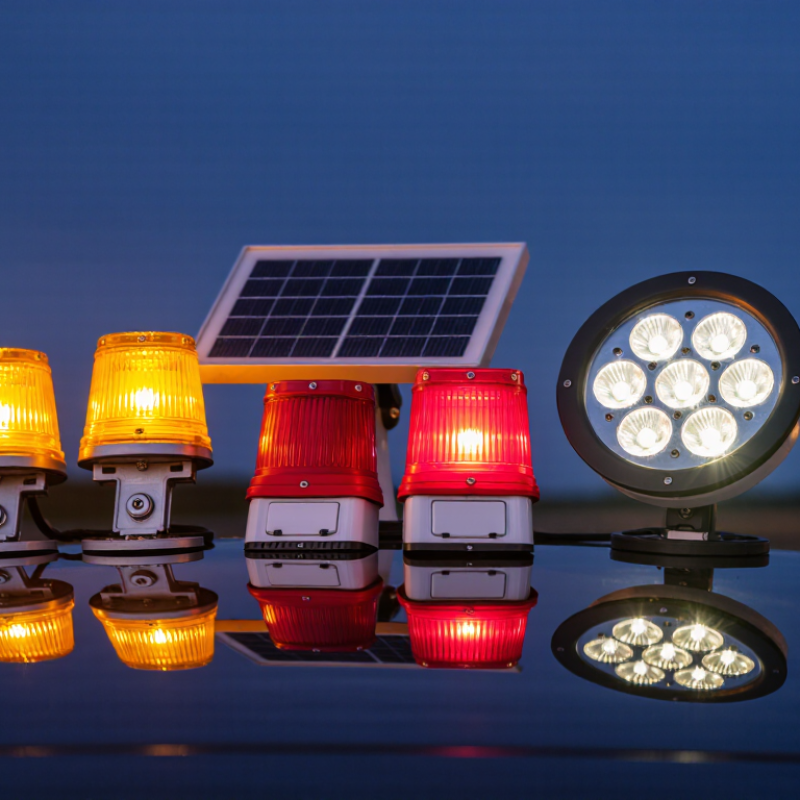
Solar warning lights combine a photovoltaic panel, rechargeable battery, controller, and high-visibility LEDs. During daylight, the panel converts sunlight into electricity and charges the battery. At dusk, a light sensor or programmed controller activates the LEDs. Many units flash in set patterns, helping draw attention to road hazards, gates, equipment, or temporary barriers. Some models use steady light instead. The exact operating time depends on sunlight, battery capacity, and flash settings.
IRENA’s Renewable Capacity Statistics 2024 reports that global solar capacity reached about 1,419 gigawatts in 2023, with roughly 346 gigawatts added that year. This expansion reflects wider use of solar technology, though it does not measure warning-light performance directly.
In the field, panel placement matters: a shaded panel can leave a light dim or inactive after a cloudy day. Check the lens for dust, and inspect the battery when night-time runtime drops. Small details matter. A flashing unit may also be harder to notice when mounted too low or aimed away from approaching traffic. Solar operation reduces dependence on external wiring, but it does not remove the need for routine checks.
What Features Define a Reliable Solar Warning Light Supplier?
Who Are the Top Solar Warning Lights Suppliers in China?
What Features Define a Reliable Solar Warning Light Supplier?
A reliable supplier provides clear test records, not just bright product photos. Check measured flash intensity, viewing angle, charging time, and operating hours after sunset. Ask for battery capacity and performance data under cloudy conditions. The IEA PVPS Snapshot of Global PV Markets 2024 reported at least 447 GW of new solar capacity in 2023. That growth makes dependable components important, but it does not prove a warning light will perform well. Test the actual unit.
Look for documented checks against relevant ingress-protection and environmental test methods, such as IEC 60529 and IEC 60068. A supplier should explain how its lights handle rain, dust, vibration, and temperature changes. Request sample units and inspect seals, wiring, panel surfaces, and mounting hardware. Confirm spare-part availability, warranty terms, and batch traceability. Claims can be uneven. A polished report may still omit test conditions, so ask who tested the product and when.
Tips: Run a nighttime field test after a cloudy day. Compare several units, and record brightness and runtime. Small differences matter.
Which Types of Solar Warning Lights Do Chinese Suppliers Offer?
Chinese suppliers offer several types of solar warning lights, designed for roads, work zones, gates, and other outdoor locations. Flashing LED beacons are common on barriers and roadside posts. Rotating-effect models create a more noticeable signal, while steady-burning lights can mark entrances or hazards that need continuous visibility. Some units provide selectable flash patterns or red, amber, and blue lenses.
The housing and mounting style matter too. Compact lamps may attach to a cone or barrier, while larger units use pole or wall brackets. Many models combine a solar panel, rechargeable battery, light sensor, and sealed casing. Battery capacity and panel size affect how long a light operates after cloudy days, so one specification alone cannot guarantee dependable performance. In practice, the datasheet is only part of the picture; installation angle and shade can change charging results.
Tips: Match the light to its location and required visibility. Check flash settings, lens color, mounting hardware, and stated runtime. Ask how runtime was tested. Small details matter. A sample unit can reveal dim output or awkward fittings before a bulk order.
How Can Buyers Compare Solar Warning Light Suppliers in China?
Comparing solar warning light suppliers in China starts with the product’s real operating conditions. Share the mounting height, daily sunlight, temperature range, and required flash pattern. Then compare solar panel output, battery capacity, charging time, and stated runtime. Ask whether runtime figures come from continuous testing or ideal conditions. Those are not the same.
Check technical evidence, not just a polished catalogue. Request sample test reports, protection ratings, material details, and clear photos of cable entries and seals. Confirm the rating matches your installation; a number on a datasheet alone proves little. Test samples outdoors if possible, including after cloudy days. Watch for dimming, water inside the housing, or loose mounts. Small defects matter.
Compare warranty terms, replacement-part availability, production lead times, and minimum order quantities in writing. Ask how the supplier checks brightness and battery performance across production batches. A responsive sales contact helps, but technical answers should be specific and consistent. No checklist catches everything. I’d still leave room for doubt: one successful sample cannot guarantee an entire shipment will behave the same way.
What Should Buyers Check Before Placing an Order?
Before ordering solar warning lights, define the site conditions and required signal performance.
The IEA PVPS Snapshot of Global PV Markets 2024 estimated that global solar capacity reached about 1.6 terawatts by the end of 2023. That growth does not prove any single product is reliable; it makes careful specification more important.
Ask suppliers for measured luminous intensity, flash pattern, viewing angle, and operating-temperature range. Request test reports, not just catalogue claims.
Check the solar panel’s rated output and the battery’s capacity, chemistry, and replacement method. Ask how many dark hours the light can operate after a full charge, and whether that figure was tested under realistic conditions.
A bright sample on a sunny afternoon tells you little.
Small details matter. Confirm the enclosure’s ingress-protection rating, and ask for supporting test documentation. For coastal or dusty sites, request evidence of corrosion and environmental testing.
Compare the warranty, spare-parts availability, production lead time, and inspection process in writing. Request a pre-shipment sample or an agreed inspection checklist covering flash timing, charging, and visible damage. Verify that certificates match the exact model being quoted.
Requirements vary by installation location and use, so have the project engineer confirm applicable standards before purchase. I would also check the supplier’s response to a simple question: can they explain test conditions clearly? Sometimes the paperwork is incomplete. That deserves follow-up.