7 Tips for Buying a UV Protection Golf Umbrella
A sunny round can change quickly: a clear fairway offers little shade, and the walk between holes can feel longer than expected. A UV Protection Golf Umbrella can help create a shaded space, but its protection depends on more than canopy size. Check the product’s stated UPF rating, fabric coverage, and manufacturer information. Look closely at the seams and edges, too. Small details matter.
A roomy canopy looks reassuring, yet wind can turn it awkward, and coverage shifts as you walk. Handle shape, weight, opening mechanism, and a vented design all affect comfort during a full round. There is no perfect choice. It is easy to focus on color or price and overlook how the umbrella feels after several holes. That deserves a second look.
These seven tips explain what to compare before buying, from UV-related specifications to practical durability and ease of use. They also help separate useful product details from vague claims. An umbrella is only one part of sun protection; hats, clothing, sunscreen, and seeking shade still matter. Read labels carefully, since features and testing details can vary by product. A few minutes of checking can make your choice more comfortable and informed.
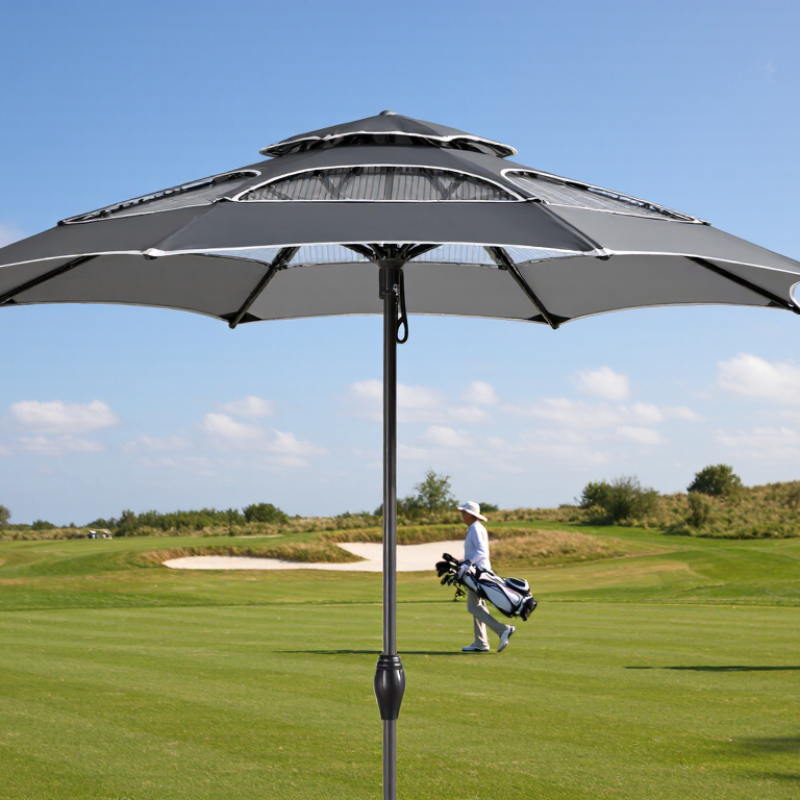
Understanding UV Ratings and Canopy Materials
A UV label is useful, but it needs context. UPF rates how much ultraviolet radiation passes through fabric under specified test conditions. A UPF 50+ canopy blocks at least 98 percent in those conditions; it cannot guarantee equal protection from every angle. Sunlight can reach skin from the sides or reflect off pale sand and pavement. Small detail, big difference.
Canopy material affects both coverage and durability. Tightly woven polyester or nylon can provide a stable base, while a UV-reflective coating may add protection. Look for a tested UPF rating, not just “sun blocking.” Fabric and coatings can wear with folding, abrasion, and prolonged exposure. A dark canopy may feel cooler in some settings, but color alone does not indicate its UV rating. Check the label.
For golf, look beyond the number. A broad canopy shades shoulders and arms, yet wind can tilt it and expose one side. Hold it overhead at your usual angle; check that the fabric stays taut and seams cover the ribs. That quick check is imperfect, but useful. Exposed skin still needs protection, especially during long rounds. Shade shifts.
Choosing the Right Canopy Size for Golf
On a golf course, the right canopy should shelter your shoulders, clubs, and a little space beside you. Many golf umbrellas measure about 60 to 68 inches across, but sizing methods can differ. Some listings give the curved fabric span rather than the straight-line width. Check how the measurement is taken, then compare the open umbrella with your golf bag. That small check can prevent a surprisingly narrow cover.
Tips: Stand beside your bag and picture both under the open canopy. If rain often blows sideways, allow extra coverage around the edges. A canopy around 62 to 68 inches may suit many golfers, while a smaller size can feel easier to carry. Fit matters more than the biggest number.
A wider canopy can help in steady rain, but it may catch more wind and feel awkward in crowded areas. Consider your height, usual playing conditions, and whether you walk the course. A bulky umbrella can become tiring after several holes. It is easy to focus on maximum coverage and overlook handling; I would weigh both before choosing. A little extra room is useful, but not at any cost.
Assessing Frame Strength and Wind Resistance
A UV golf umbrella needs a frame that stays steady through repeated opening, closing, and sudden gusts. Check the ribs for even spacing and secure joints. Flexible ribs can bend slightly under pressure, while brittle ones may snap. Feel the handle, too. A loose connection can make a large canopy tiring to control. Small details matter.
For wind resistance, look for a vented canopy that lets some air pass through instead of trapping it. Vents can reduce strain, but they do not make an umbrella storm-proof. Avoid testing it in strong winds. Open it in a sheltered area and gently check whether the ribs flex evenly. Watch for wobbling. I used to focus only on canopy size; that was a mistake, since a broad canopy can catch more wind.
Tip: Open and close the umbrella several times before buying. Listen for grinding, and check that the runner locks firmly. Inspect the rib tips and seams for gaps or loose stitching. If the frame feels unusually light or rattles when moved, compare it with sturdier options. Don’t rely on appearance alone. A neat finish can hide weak joints.
Comparing Handles, Opening Systems, and Portability
A golf umbrella can feel comfortable in a shop and awkward after nine holes, so handle shape deserves a hands-on check. A contoured grip may sit securely in your palm, while a straight handle can slide more easily into a cart holder. Try holding it with a gloved hand. That small detail matters in rain. A wrist strap helps when you need both hands, but a bulky strap may snag on clubs or bag pockets. There is no perfect handle for every golfer.
Opening systems affect convenience and control. An automatic button is quick when rain starts suddenly, though the canopy needs room to open safely. Manual models take longer, but their simpler mechanism may be easier to inspect and maintain. Practice opening and closing the umbrella before choosing. A stiff slider is frustrating.
For portability, check the closed length and weight beside your golf bag, not just on a product label. A light frame is easier to carry between holes, but an overly flimsy feel may be unwelcome in gusts. Look for clear UV protection information, and remember that shade cannot block all reflected sunlight. I would compare the handle, opening action, and folded size together; focusing on only one can lead to a poor fit.
Evaluating Durability, Care, and Overall Value
Tip 1: Check the canopy, frame, and joints before buying. A UV rating, such as a stated UPF value, gives more useful information than vague “sun protection” wording. Also look for broad coverage that stays practical to carry. Thin fabric can feel light in a shop, but repeated folding may reveal weak seams or loose stitching. A little weight is not always a flaw.
Tip 2: Care affects how long an umbrella remains useful. After a wet round, open it fully at home and let the canopy dry before storing it. Brush off grit gently; trapped dirt can rub against the fabric during folding. Follow the care label, especially if the canopy has a special finish. I sometimes forget that step, and it is easy to assume every umbrella can be cleaned the same way.
Tip 3: Compare value by expected use, not just the checkout price. A sturdy shaft, comfortable grip, and canopy that is easy to open can matter over many rounds. Check that replacement parts or repair options are available when possible. Wind claims deserve caution: no golf umbrella should be treated as stormproof. A slightly higher price may make sense, but only if the construction and care needs suit your routine.