Choosing expandable crowd barriers for global projects requires more than comparing prices or folded dimensions. Each site presents different crowd flows, weather conditions, floor surfaces, and operational risks. A barrier that performs well in a dry exhibition hall may become unstable on a windy outdoor walkway. The right selection begins with a clear understanding of the project’s people, movement patterns, and installation environment.
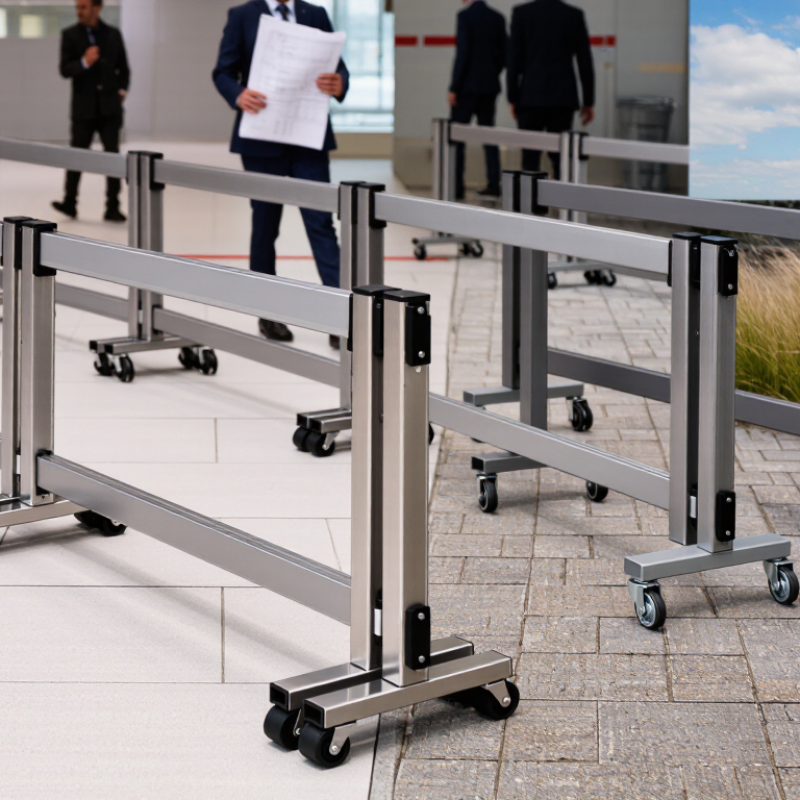
Expandable crowd barriers should be assessed for frame strength, locking performance, base stability, visibility, and storage efficiency. Stainless steel may suit humid coastal locations, while powder-coated steel can offer practical durability for indoor venues. Check wheel quality carefully. Small wheels may struggle over door thresholds, uneven paving, or temporary flooring. Measure the extended length, collapsed size, and connection method before placing a large order. These details often affect transport costs and daily setup time.
Reliable suppliers should provide material information, load guidance, inspection procedures, and consistent production records. Their experience with airports, stadiums, retail spaces, or public events can reveal useful limitations. Still, supplier claims need practical verification. Request samples, test the locking mechanism, and observe how one person moves the unit. A minor design weakness may become a serious maintenance issue across hundreds of barriers. Standards and project requirements also differ between countries, so local professionals should review suitability before deployment. That step may feel slow. It can prevent expensive rework later. A thoughtful choice balances safety, usability, durability, appearance, and the realities of each location.
Expandable crowd barriers are portable systems that create temporary boundaries without permanent construction. They usually use linked sections that open like an accordion and fold into a compact unit. Staff can guide visitors, protect work zones, or separate queues within minutes. Some models include swivel wheels, reflective panels, and locking connectors. These details matter when a project moves between airports, exhibitions, warehouses, and public venues.
For global projects, flexibility is more valuable than appearance alone. Check the barrier’s closed size, extended length, weight, and surface stability before ordering. A lightweight unit may suit indoor flooring but shift outdoors in strong wind. A heavier unit can be safer, yet difficult for one worker to move. Inspect wheel quality, joint strength, corrosion resistance, and visibility in low light. Local safety requirements may also differ, so technical teams should confirm specifications with qualified site professionals. No barrier fits every location. That is easy to overlook.
Tips: Measure doorways and storage areas first. Test one sample on the actual floor. Leave enough space for emergency access and routine cleaning. Choose clear markings that workers and visitors can understand. Record inspection dates, damaged joints, and missing parts. Small gaps can become serious problems.
Choosing expandable crowd barriers begins with understanding the site, not the product catalogue. Measure entrances, walkways, slopes, loading areas, and emergency access points. A barrier that fits a flat lobby may fail on uneven outdoor ground.
Define the expected crowd clearly. Note peak attendance, movement speed, queue duration, and nearby hazards such as vehicles or temporary equipment. Small details matter. A narrow exit can create pressure when people stop for inspection or directions.
Field teams should also consider children, older visitors, wheelchair users, and people carrying luggage. Local accessibility and safety requirements must guide the layout.
Performance depends on more than extension length. Check frame strength, locking stability, wheel quality, visibility, weather resistance, and ease of repositioning.
For outdoor projects, wind and rain deserve practical testing. A lightweight unit may move unexpectedly on a wet surface. That risk is easy to underestimate.
Ask for load data, inspection records, operating instructions, and replacement-part support. Trained staff should inspect joints and wheels before each event.
The first layout is rarely perfect. Observe real movement, record bottlenecks, and adjust the spacing. A barrier should guide people without creating a feeling of confinement.
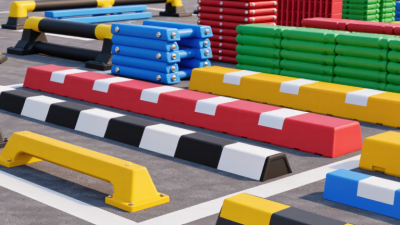
Choosing expandable crowd barriers for global projects requires more than comparing prices. Materials must match the site climate, handling demands, and expected service life. Powder-coated steel suits high-impact areas and windy outdoor sites. Aluminum is lighter and easier to transport, but it may need careful handling. High-density plastic resists moisture and many chemicals. However, intense sunlight can weaken some plastics over time.
Size affects both safety and storage.
A barrier around one meter high can guide pedestrians without blocking visibility. Longer extensions reduce the number of units required, yet they may become less stable on uneven ground. Check the folded width before ordering. Narrow storage space can change the best choice. For busy entrances, select a design with wide feet, smooth wheels, and secure connection points. Reflective panels improve visibility near vehicle routes or during poor weather. Small details matter.
Tips: Test one sample on the actual surface. Measure packed units and doorway widths. Ask suppliers for material data, load guidance, and temperature limits. Review local project requirements before shipment. Do not assume one design fits every country. A barrier that performs well on dry concrete may move on wet tiles. This is easy to overlook. There is no perfect specification, either. The most reliable choice balances strength, portability, visibility, and maintenance for the real site conditions.
How to Choose Expandable Crowd Barriers for Global Projects?
Safety begins with the barrier’s intended use, not its appearance. Check local standards, including EN 13200 for spectator facilities and ISO 22320 for incident management. In the United States, OSHA requires guardrails to withstand a 200-pound force under specified conditions. That figure is useful, but it does not replace project-specific testing. Ask for load certificates, material specifications, and independent inspection records. A barrier protecting a stadium entrance needs different performance from one guiding pedestrians through a construction site.
Mobility also affects safety. Select units with lockable casters, ergonomic handles, and stable feet. A 2023 global mobility report from the International Transport Forum highlights how temporary infrastructure can influence pedestrian flow and accessibility. Avoid narrow passageways and sudden direction changes. For durability, compare corrosion resistance, weld quality, UV stability, and replacement-part availability. Galvanized steel may suit outdoor projects, while lightweight alloys reduce handling effort. However, lighter is not always safer. That assumption deserves review. Maintenance records should show inspection dates, damaged components, cleaning methods, and storage conditions. Poor storage quietly shortens service life.
Tips: Test a sample barrier on the actual surface before bulk purchasing. Measure deployment time with two workers. Check wheelchair clearance and emergency access. Review regional certification requirements with a qualified safety engineer. Keep a spare-parts list. Small wheels fail quickly on uneven ground. That detail is easy to miss. Cite supplier claims only after checking test methods, laboratory competence, and certificate validity.
| Evaluation Dimension | Recommended Benchmark or Data Point | Why It Matters | Documents or Evidence to Request | On-Site Acceptance Check | Priority |
|---|---|---|---|---|---|
| Applicable safety standards | Confirm compliance with the regulations applicable to the installation country, venue type, occupancy level, and intended use. EN 13200-3 and BS 6180 may be relevant references for spectator or building barriers, but neither should be treated as universally applicable. | Crowd-barrier requirements differ between public events, construction sites, transport hubs, stadiums, and emergency-control areas. | Declaration of conformity, applicable test reports, engineering calculations, installation instructions, and local authority approval where required. | Check that the delivered model, dimensions, materials, and accessories match the documents and approved project specification. | Critical |
| Design crowd-load capacity | Use the project engineer’s specified horizontal and accidental-load requirements. Do not estimate capacity from product weight, appearance, or the number of deployed panels. | Crowd pressure, impact, local wind, uneven ground, and barrier-line length can create loads that are not visible during a simple static inspection. | Verified load-test report identifying test direction, support conditions, deformation limits, failure mode, and tested configuration. | Inspect for bent frames, permanent deformation, cracked welds, unstable feet, and gaps created when several units are connected. | Critical |
| Barrier height and opening size | Common portable crowd barriers are approximately 1.0–1.2 m high, with openings selected to prevent foreseeable passage, climbing, or entrapment hazards for the intended audience. | Height and aperture geometry influence pedestrian separation, visibility, climbing behavior, and child-safety risk. | Dimensioned drawings, aperture measurements, risk assessment, and any child-access or entrapment assessment required by the project. | Measure random units and confirm there are no sharp protrusions, accessible climb points, or hazardous pinch openings. | Critical |
| Expansion range and coverage | Typical manually expandable units cover roughly 2.0–3.5 m when open, depending on the design. Select the working length based on the actual layout rather than the maximum advertised length. | The usable length affects the number of units, connection points, storage space, and total deployment time. | Closed and open dimensions, minimum operating radius, connection detail, and layout drawings. | Open and close several units on level ground; check smooth movement and consistent locking at different angles. | High |
| Mobility and handling weight | For frequent manual deployment, a practical target is approximately 15–25 kg per unit, subject to stability and load requirements. Heavier systems may be appropriate when higher resistance is required. | Lower handling weight can reduce setup time and manual-handling risk, but excessive weight reduction may compromise stability. | Net weight, recommended handling method, lifting points, trolley compatibility, and manual-handling risk assessment. | Confirm that two trained workers can safely move the unit over the actual route, including ramps, thresholds, and storage areas. | High |
| Wheels and caster performance | For mixed indoor and outdoor surfaces, 75–125 mm casters are often more practical than small hard wheels. Lockable swivel casters or positive wheel brakes are preferred where movement must be controlled. | Caster size, tread, bearing protection, and braking directly affect maneuverability and unintended movement. | Caster load rating, wheel material, brake specification, replacement-part information, and floor-surface limitations. | Roll the barrier over the project’s actual surfaces and verify that brakes hold the unit on the maximum expected slope. | High |
| Locking and connection system | Use positive mechanical locks that cannot release through ordinary vibration or pedestrian contact. Connections should maintain alignment without creating trip or finger-pinch hazards. | A strong individual panel can still fail as a barrier line if adjacent units separate, rotate, or develop excessive gaps. | Connection drawings, lock-cycle test results, replacement pin specifications, and failure or misuse instructions. | Apply moderate manual force to each connection and confirm that pins, hooks, or latches remain fully engaged. | Critical |
| Frame and material strength | Common constructions use welded steel or aluminium frames. Steel generally provides higher mass and impact resistance; aluminium can reduce handling weight but requires careful design of joints and feet. | Material selection affects structural capacity, portability, corrosion behavior, repairability, and lifecycle cost. | Material grades, tube or section dimensions, weld procedure information, quality inspection records, and repair limitations. | Check weld continuity, frame straightness, loose fasteners, damaged feet, and inconsistent material markings. | High |
| Corrosion protection | For outdoor use, consider hot-dip galvanizing, a properly specified powder-coating system, or corrosion-resistant stainless-steel components. The coating system should match humidity, salt exposure, chemicals, and storage conditions. | Coastal, tropical, industrial, and winter-salted environments can accelerate corrosion at welds, joints, fasteners, and cut edges. | Coating specification, surface-preparation method, coating-thickness records, corrosion-test report where relevant, and touch-up procedure. | Inspect corners, welds, drain points, wheel brackets, and fasteners for blistering, red rust, peeling, or coating damage. | High |
| Stability on uneven ground | Specify the permitted surface slope, gap limits, support requirements, and any need for ballast or anchoring. Portable barriers should not be used on unstable ground without an engineered solution. | A barrier that is stable on a smooth floor may overturn or shift on paving joints, grass, gravel, ramps, or temporary flooring. | Stability calculations, installation limits, ballast requirements, and approved layout examples. | Test representative units on the worst expected surface and verify that feet remain fully supported. | Critical |
| Visibility and hazard marking | Use high-visibility colors, reflective markings, or warning panels where barriers operate near vehicles, low light, evacuation routes, or construction traffic. | Improved visibility reduces collision risk and helps security personnel identify the intended pedestrian boundary. | Color and marking specification, photometric information for reflective materials where applicable, and cleaning instructions. | Check visibility from pedestrian and vehicle approaches during both daylight and expected low-light conditions. | Medium |
| Maintenance frequency | Perform a visual inspection before every deployment. For frequently used units, schedule a documented detailed inspection at least monthly or according to the manufacturer’s instructions and site risk assessment. | Regular inspection identifies damaged locks, worn wheels, corrosion, bent frames, and missing components before use. | Inspection checklist, service intervals, lubrication guidance, torque requirements, and defect-reporting procedure. | Record serial or asset numbers, defects, corrective actions, inspection date, and responsible person. | High |
| Cleaning and sanitation | Select surfaces that can be cleaned with neutral detergent and water without damaging coatings, labels, bearings, or drainage points. | Events, transport facilities, and public venues may require rapid removal of dirt, spills, biological contamination, or de-icing residue. | Approved cleaning agents, drying instructions, chemical-resistance information, and replacement-label guidance. | Clean a sample unit and confirm that water drains properly and no coating softening, staining, or wheel seizure occurs. | Medium |
| Replacement parts and repairability | Prefer designs with replaceable casters, pins, latches, feet, fasteners, and labels. Establish a minimum spare-parts package for every project location. | Repairable units reduce downtime, waste, cross-border shipping, and total ownership cost. | Parts catalogue, part numbers, lead times, repair instructions, warranty terms, and local service contacts. | Replace one wear component using normal site tools and verify that the repaired unit returns to safe operation. | High |
| Storage and transport efficiency | Record the folded dimensions, stacking limit, pallet quantity, total shipment weight, and required protection against moisture and impact. | Compact storage can reduce warehouse space, freight cost, handling time, and damage during international transport. | Packing specification, pallet drawings, maximum stack height, lifting instructions, and transport protection requirements. | Verify that packed units remain stable, labels remain readable, and no locks, casters, or frames are loaded beyond their limits. | Medium |
| Global project compatibility | Use metric dimensions with clearly identified units, multilingual safety instructions, standardized inspection records, and regionally available replacement parts. | Consistent documentation and local support reduce installation errors across countries, contractors, and operating teams. | Multilingual manuals, technical drawings in editable formats, country-specific compliance statement, delivery schedule, and training materials. | Confirm that local operators understand deployment, locking, inspection, emergency removal, and reporting procedures. | High |

Supplier comparison should begin with field performance, not catalogue price. Check barrier length, folded size, wheel quality, locking strength, corrosion resistance, and replacement-part access. Ask for load tests, material certificates, inspection records, and installation photographs from similar projects. UNCTAD’s Review of Maritime Transport 2023 states that over 80% of global merchandise trade moves by sea. Therefore, packaging and container efficiency directly affect project cost. Price is not enough. A supplier offering compact folded units may reduce freight volume, storage space, and handling time. Compare the full landed cost, including export packing, insurance, duties, inland delivery, and site labor.
Logistics terms must be written clearly. Confirm the delivery point, lead time, port responsibility, and damage-claim process. World Bank’s Logistics Performance Index 2023 emphasizes reliability, tracking, and delivery timeliness. These factors matter when barriers must arrive before a venue opens. Request a production schedule and a spare-parts plan. Installation support should include layout drawings, anchoring guidance, operating training, and remote technical assistance. On-site support may cost more, but unclear instructions can create delays. I have seen buyers focus on unit price and overlook labor. That gap matters. Local site conditions can also change the best design.
Tips: Test one sample barrier on the actual surface. Check uneven floors, slopes, crowd-flow width, and emergency access. Require a written inspection checklist. Compare at least three suppliers using the same specifications. Do not accept vague promises about delivery or training. A low-cost quotation can still be the expensive option. Recheck assumptions before signing.