
How to Choose a Sanitary Napkin Making Machine in 2026?
Choosing a Sanitary Napkin Making Machine in 2026 requires more than comparing advertised production speeds. Buyers must examine hygiene control, material compatibility, automation, energy use, and long-term service support. A machine producing 600 pieces per minute may appear attractive, yet unstable sealing can create waste, complaints, and costly interruptions.
In practice, experienced manufacturers inspect the full production line, not only the main machine. They check the forming unit, absorbent core system, adhesive application, cutting accuracy, packaging interface, and dust-control design. Ask suppliers for verified samples, factory videos, maintenance schedules, and performance data from comparable installations. A clear demonstration should show actual raw materials, product dimensions, operating speed, and rejection rates. Do not rely on polished showroom footage alone.
No machine is perfect. Even reliable equipment may need adjustments when fluff pulp, nonwoven fabric, or adhesive batches change. This point is easy to overlook. A responsible supplier should explain cleaning procedures, spare-part availability, operator training, and technical response times. Buyers should also evaluate electrical requirements, workshop space, noise levels, and future expansion plans. These details affect daily productivity more than impressive brochures.
This guide explores the main criteria for selecting a Sanitary Napkin Making Machine in 2026. It considers practical factory experience, engineering performance, product quality, and supplier credibility. The goal is not to recommend one universal model. Each manufacturer faces different budgets, product designs, labor conditions, and market expectations. Careful comparison, independent verification, and realistic production trials provide a safer basis for investment.
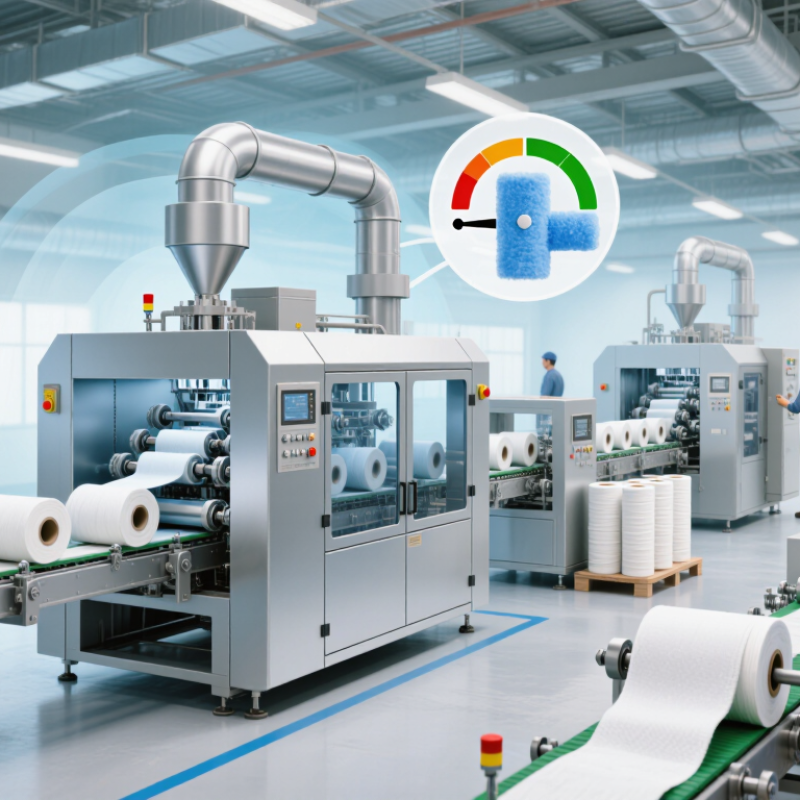
Define Your Sanitary Napkin Production Requirements
How to Choose a Sanitary Napkin Making Machine in 2026?
Define Your Sanitary Napkin Production Requirements
Start with the product, not the machine brochure. Define the napkin length, width, thickness, absorbent core, wings, adhesive pattern, and packaging format. A 2024 Grand View Research report estimated the global sanitary napkin market at more than USD 24 billion. That scale hides major differences between regional products and consumer preferences. Your machine must match your exact specification.
Calculate realistic output per minute. Include planned shifts, changeover time, maintenance, and rejected units. A line advertised at 1,000 pieces per minute may deliver less in daily operation. Consider whether you need one standard size or several sizes. Frequent changes can increase material waste and operator workload. Keep that in mind.
Material compatibility deserves close attention. Test fluff pulp, superabsorbent polymer, nonwoven fabric, release paper, and packaging film before purchase. ISO 9073-1 provides a recognized method for testing nonwoven mass per unit area. Use similar checks during trials. Also define electricity, compressed-air, floor-space, and ventilation requirements. These details are easy to overlook.
Automation should support your workforce, not impress visitors. Specify sensor controls, tension adjustment, fault alarms, dust management, and accessible cleaning points. The 2023 Smithers market analysis identified hygiene, absorbency, and sustainable materials as important development pressures. I would not select a high-speed line before confirming local servicing and spare-part access. That decision can look efficient, then become expensive.
| Requirement Area | Key Parameter | Practical Planning Data for 2026 | Recommended Selection | Verification Point |
|---|---|---|---|---|
| Product Portfolio | Napkin formats | Day, night, ultra-thin, maxi, maternity, or panty-liner products; common finished lengths are approximately 150–450 mm. | Choose a machine with adjustable product length, width, embossing, and folding settings if multiple formats are planned. | Request samples in every planned size and confirm changeover settings. |
| Target Output | Nominal line speed | Entry-level: about 300–600 pieces/min; medium-speed: about 600–1,000 pieces/min; high-speed: above 1,000 pieces/min. | Select capacity from actual demand rather than maximum advertised speed. Allow 15–25% spare capacity for growth and downtime. | Compare tested continuous speed, not only the mechanical maximum. |
| Production Volume | Monthly demand calculation | Planned monthly output = pieces/min × operating minutes/hour × operating hours/day × working days/month × utilization rate. | Use a realistic utilization rate of approximately 75–85% to account for setup, material changes, cleaning, minor stops, and rejects. | Use at least three months of forecast demand and include seasonal peaks. |
| Core Structure | Absorbent core formation | Typical core materials include fluff pulp, absorbent paper, superabsorbent polymer, or combinations of these materials. | Choose a configuration that controls core weight, distribution, thickness, and density consistently. | Check basis-weight tolerance, core-profile repeatability, and material-loss rate. |
| Material Compatibility | Raw-material width and roll handling | Common materials include nonwoven topsheet, PE or breathable backsheet, tissue, release paper, elastic, adhesive, fluff pulp, and absorbent polymer. | Specify maximum roll diameter, core diameter, web width, tension range, and splice method for every material. | Run the exact grades and grammages intended for commercial production. |
| Product Features | Wings, channels, embossing, and adhesive | Optional functions may include wing folding, contour embossing, pressure-sensitive positioning adhesive, individual wrapping, and easy-tear packaging. | Select only features required by the product specification to reduce complexity, waste, and changeover time. | Confirm adhesive application accuracy, folding symmetry, and seal strength. |
| Automation Level | Controls and operator support | Automation may cover servo-driven positioning, touchscreen recipes, automatic tension control, web-break detection, fault alarms, and production monitoring. | Use recipe management and automatic monitoring for multiple product sizes or frequent changeovers. | Check access levels, data export, alarm history, remote support, and language options. |
| Quality Control | Inspection and rejection functions | Useful controls include missing-material detection, product-length measurement, metal detection, adhesive inspection, seal inspection, and automatic reject systems. | Integrate inspection points where defects can be detected before individual wrapping or case packing. | Measure false-reject rate, detection accuracy, traceability, and calibration requirements. |
| Packaging Format | Wrapping and bagging options | Packaging may be individual wrap, multi-piece pouch, carton, or bulk case packing; pack counts commonly range from 8 to 40 pieces. | Match the packaging module to retail format, required pack count, film type, and sealing temperature. | Verify seal integrity, film tracking, print registration, and pack-count accuracy. |
| Utilities | Electrical power and compressed air | Many automatic lines require three-phase industrial power and clean, dry compressed air; exact requirements depend on configuration and packaging modules. | Plan power capacity, air-treatment equipment, grounding, ventilation, and backup power where production continuity is important. | Obtain a utility list showing voltage, frequency, connected load, air pressure, and air consumption. |
| Factory Space | Machine footprint and workflow | The complete installation area must include the line, electrical cabinet, raw-material storage, finished-goods staging, maintenance access, and operator walkways. | Reserve additional space around the line for roll loading, inspection, cleaning, and safe material movement. | Approve a scaled layout before ordering and verify floor loading and door dimensions. |
| Labor and Skills | Operators and maintenance staff | Staffing depends on automation, packaging level, shift pattern, material handling, and quality procedures; a fully integrated line generally needs fewer direct operators than a semi-automatic line. | Prioritize accessible adjustments, clear alarms, standardized work instructions, and preventive-maintenance training. | Request installation training, manuals, spare-parts lists, and troubleshooting procedures. |
| Changeover Performance | Format-change time | Changeover time varies widely; simple format adjustments may take less than 30 minutes, while tooling, material, and packaging changes can take longer. | Choose quick-adjust guides, stored recipes, tool-free adjustments, and modular components when producing many sizes. | Test a complete changeover using trained operators and record restart waste. |
| Efficiency and Waste | Material yield and overall equipment effectiveness | Track availability, performance, and quality separately. Monitor trim waste, start-up waste, defective pieces, adhesive loss, and packaging-film loss. | Select stable web tension, accurate cutting, low-loss splicing, and automatic reject collection. | Require a production trial with measured output, good-piece rate, waste percentage, and energy use. |
| Compliance and Hygiene | Materials, contact surfaces, and factory controls | Use cleanable machine surfaces, controlled material storage, dust management, personnel hygiene procedures, and documented quality checks. | Select a design compatible with applicable local product-safety, labeling, electrical, and workplace-safety requirements. | Review technical files, risk assessment, guarding, emergency stops, and quality documentation. |
| Lifecycle Cost | Total cost of ownership | Evaluate purchase price together with installation, tooling, utilities, labor, consumables, spare parts, maintenance, downtime, training, and future upgrades. | Choose the lowest total cost per saleable piece rather than the lowest initial purchase price. | Compare a five-year cost model using the same output, utilization, waste, and maintenance assumptions. |